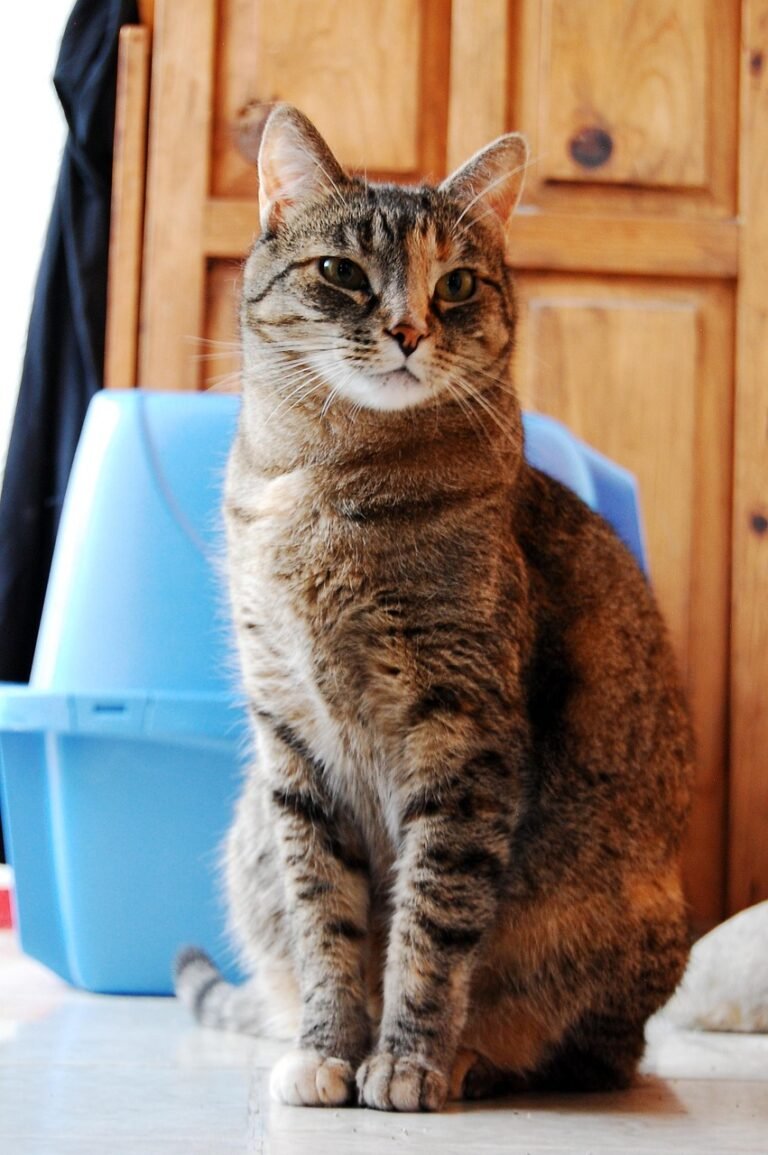
Your cat is eating well, maybe even more than usual, and asking for food all the time. Yet when you pick it up, it feels lighter, the spine and hips are easier to feel, and the face looks thinner. Weight loss in a cat that eats normally is not something to wait out. It is one of the clearest signs that something inside has changed.
The main causes
Hyperthyroidism
The University of Florida’s veterinary podcast describes hyperthyroidism as common in older cats. The MSPCA-Angell notes it can cause weight loss despite an increased appetite, excessive drinking and heart disease, and that it is not uncommon in older cats.
Diabetes
The Cornell Feline Health Center lists weight loss despite a good appetite, together with increased thirst and urination, as the two most common signs owners notice. Diabetes causes the body to break down fat and protein instead of using sugar for energy.
Problems digesting or absorbing food
The University of Florida podcast notes that, less commonly, a maldigestion or malabsorption disorder can make a cat lose weight in spite of a ravenous appetite.
Cancer
The same source lists cancer as another possible cause.
Signs to watch for
| Sign | Can point to |
|---|---|
| Drinking more | Diabetes, with more urination (Cornell); hyperthyroidism (MSPCA-Angell) |
| Always hungry, still losing weight | Hyperthyroidism, diabetes, malabsorption |
| Loud crying, especially at night | Hyperthyroidism is one medical cause of excessive meowing (MSPCA-Angell) |
If your older cat has also started yowling at night, read why old cats yowl at night. If your cat is drinking from taps and glasses more than before, see why cats drink from the tap, and note the change for your vet.
What your vet will do
Treatment depends on the cause. For diabetes, Cornell describes a combination of insulin and diet, with insulin usually given about every 12 hours, and newer oral medications approved in 2023 for some newly diagnosed cats. Your vet will discuss the options for your cat.
How to check at home
- Weigh your cat regularly. Weigh yourself holding your cat, then without, and subtract. Write it down.
- Feel the spine and hips. If they feel sharper than before, tell your vet.
- Measure food and water. Note how much your cat eats and drinks each day, and how full the litter tray is.
- Take your notes to the vet. Dates and numbers help your vet far more than a general feeling.
FAQ
Why is my cat losing weight but still eating?
The most common reasons are hyperthyroidism, diabetes and problems absorbing food. Cancer is another possibility. See your vet.
Is weight loss in old cats normal?
Unplanned weight loss should always be checked. Hyperthyroidism, for example, is common in older cats.
What are the signs of diabetes in cats?
Cornell lists weight loss despite a good appetite and increased thirst and urination as the most common signs owners notice.
Can these conditions be treated?
Many can be treated or managed. Your vet will explain the options once the cause is found.
When is it an emergency?
If your cat is very weak, not eating, vomiting, or a diabetic cat is wobbly or having seizures. Get help right away.
Sources
This article is for general information and is not a substitute for advice from your veterinarian.