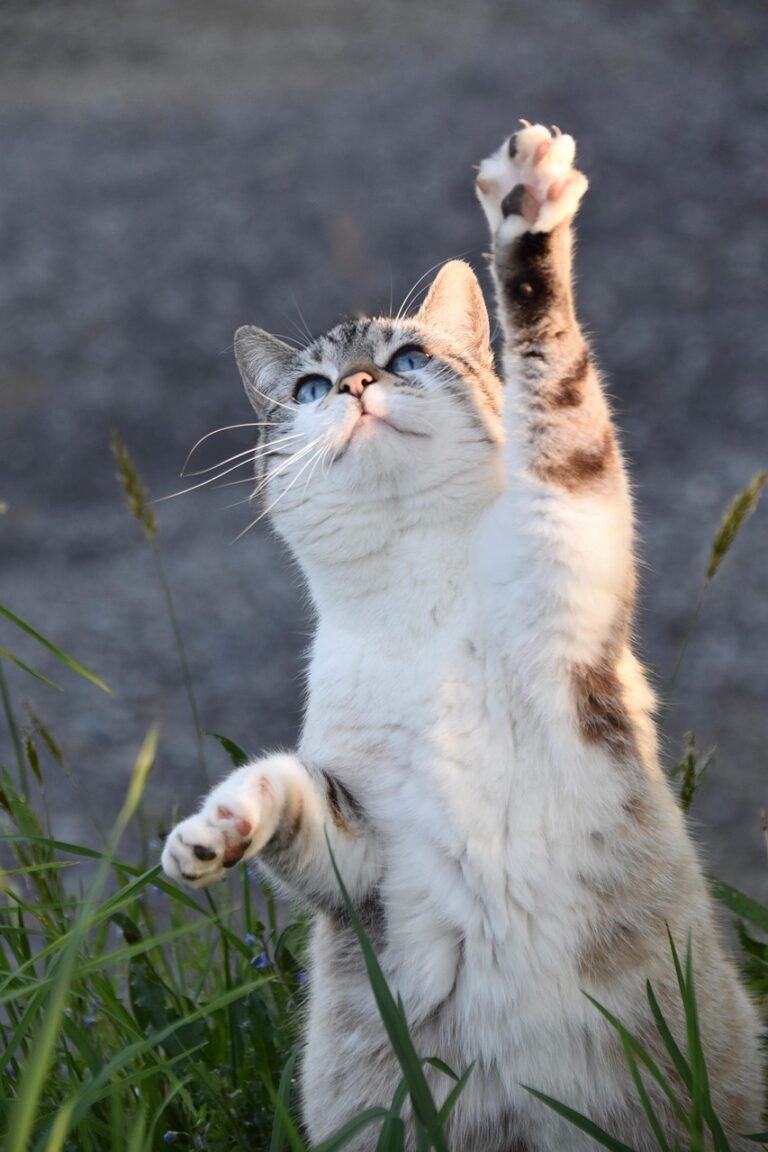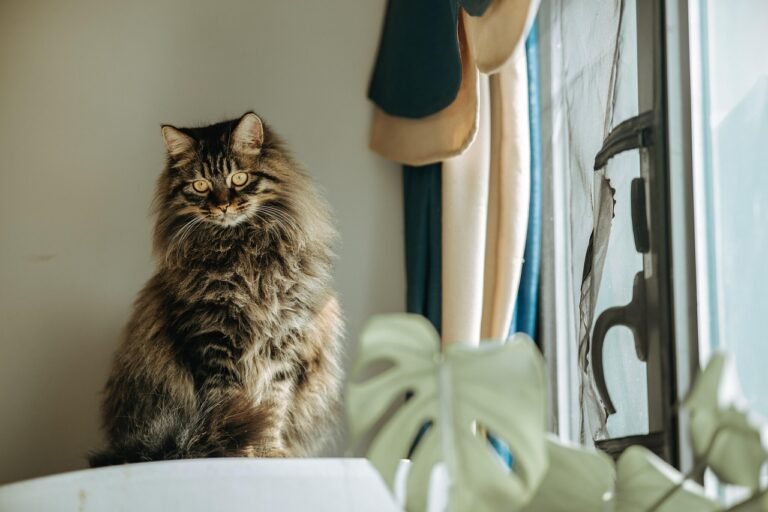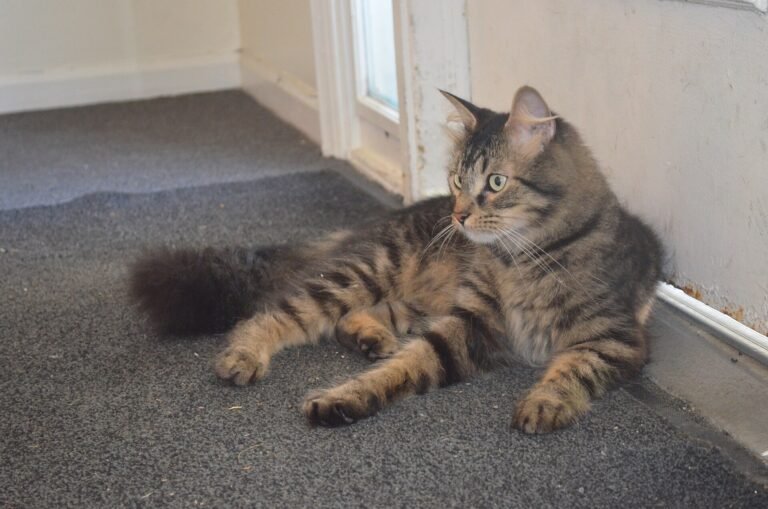
She walks along the table to your glass of water. She sits beside it. She looks at you. You say her name. One paw comes up, taps the glass a centimetre towards the edge, and she looks at you again. You both know how this ends.
It is tempting to read this as defiance, and it is the wrong reading. Cats do this for a small number of reasons, and the one in that scene, the look before the push, tells you most of what you need to know. She is not testing your rules. She has learned that this is the most reliable way to make you get up.
The good news is that knocking things over is one of the easier cat habits to change, because the causes are simple and the fixes are cheap.
The short version
- Dr Wailani Sung, writing for Vetstreet, links the behaviour to play, exploration, and attention: “some cats have learned that they can get our attention through this behavior.”
- If she looks at you before she pushes, it is mostly about attention. If she does it in an empty room, it is mostly about play.
- Clear the surfaces first. Nothing you care about should be within reach of a bored cat while you work on the rest.
- Stop reacting to the attention version. Expect it to get worse for a few days before it stops.
- Meet the need underneath: daily play that lets her hunt, and some of her food from a puzzle feeder, as Dr Sung recommends.
- Do not punish. Shouting or spraying teaches her to do it when you are out of the room.
On this page
Why she does it
Dr Wailani Sung’s explanation for Vetstreet is the clearest short account: “Part of the appeal may be linked to play-related behavior and the other part may be an expression of exploratory behavior.” Add the movement and noise of something falling, and the reaction it gets from you, and you have most cases.
| Reason | What is going on |
|---|---|
| Play and hunting | A small object that moves when touched is close to prey. Batting, watching it fall, and sometimes following it down is predatory play with no prey available. |
| Exploration | Cats test objects with their paws. A new item on a surface often gets a tap simply to find out what it is. |
| Attention | The object hits the floor, you react. Repeat this a few dozen times and she has a lever that summons you. |
| Boredom | An indoor cat with little to do in the evening will make her own entertainment, and your shelf is it. |
The AAFP and ISFM environmental needs guidelines list the “opportunity for play and predatory behavior” as one of five things every cat needs from her home. A cat knocking pens off desks is usually telling you that this one is not being met.
Which reason is yours
You can usually tell in a week of watching. Note when it happens, who is in the room, and what she does just before.
She looks at you first. Attention. This is the classic version, and it is learned. She has worked out that it is faster than meowing.
It happens when you are busy. On the phone, working at the laptop, cooking. Also attention, and often a sign she wants a meal or a game.
It happens at night or when you are out. Play and boredom. Nobody is watching, so attention is not the point.
She chases the object after it falls. Play. The fall is the start of the game, not the end.
It is new things, not the same things. Exploration. A new candle or plant gets investigated, then mostly left alone.
The plan
- Clear the launch pads. Dr Sung’s first recommendation is environmental management: remove light, knockable items from surfaces she can reach. Glasses, pens, earrings, plant pots. This is not giving in. It stops every success from being practice while you fix the cause.
- Play with her properly, twice a day. Ten minutes with a wand toy, run as a hunt: let her stalk, chase and catch, and finish with a small meal. A cat who has hunted is far less interested in the salt shaker. This matters most in the hour before her usual knocking time.
- Make her work for some food. Dr Sung suggests puzzle toys and making a cat “work for some of his food”. If she ignores puzzles, start very easy, as in our guide to getting a cat to use a puzzle feeder.
- Make the surface less inviting. Dr Sung suggests “double-sided sticky tape to the desk, table or shelf” for spots she should not be on at all. Most cats dislike the feel on their paws and go elsewhere.
- Give her a better perch nearby. If she sits on your desk to be near you, a cat bed or shelf next to the desk gives her the closeness without the stationery. Reward her for using it.
- Redirect rather than react. When she jumps up to the forbidden spot, calmly toss a toy away from the surface or cue her to her perch. Dr Sung recommends redirection with toys or clicker training rather than punishment.
One idea that works for determined knockers: a “legal” shelf. Put a few light toys, a cork or two and a crumpled paper ball on a low shelf she is allowed on. Knocking those off costs you nothing and gives the behaviour somewhere to go. Pick them up later, not while she is watching, so you are not rewarding the attention version.
If it gets worse first
If the behaviour is about attention, and you stop jumping up every time something falls, expect a few days of more knocking, not less. This is the same thing that happens when you stop responding to a cat waking you early: behaviour that used to work gets louder and more persistent before it fades. We covered the pattern in detail in why your cat wakes you at 5am.
Make that week easier on yourself by clearing everything breakable, so ignoring her is genuinely possible. Then give her plenty of attention at times you choose, especially when she is calm on the sofa or her perch. The goal is not less attention. It is attention that does not depend on gravity.
What not to do
Shouting, clapping or water spray. These still count as a reaction, and for some cats any reaction is a reward. They also teach her that you are unpredictable, and she will simply wait until you leave the room.
Rushing over to pick things up while she watches. For an attention-motivated cat this is the jackpot. Pick up later, without comment.
Removing every surface and changing nothing else. Management alone leaves the bored, under-played cat with the same need. She will find another shelf.
Common questions
Why does my cat knock things off the table?
Usually a mix of play, exploration and attention. Dr Wailani Sung, writing for Vetstreet, links it to play-related and exploratory behaviour and notes that some cats have learned it gets their owner’s attention.
Why does my cat look at me before knocking something over?
Because you are part of the game. A cat who checks your face first has usually learned that knocking things over makes you react. It is attention-seeking, not spite.
How do I stop my cat knocking things over?
Clear small items from surfaces she can reach, give her two proper play sessions a day, feed some of her food from a puzzle toy, use double-sided tape on spots she should not be on, and stop reacting to the knocking itself.
Should I spray my cat with water when she does it?
No. It does not teach her what to do instead, it damages her trust in you, and she learns to do it when you are not there. Redirect with a toy or a better perch instead.
Is it a sign my cat is bored?
Often, yes. The AAFP and ISFM environmental needs guidelines name the opportunity for play and predatory behaviour as a core need for every cat. A cat with too little of it tends to invent her own games.
She started doing it more when I stopped reacting. Is that normal?
Yes. When a learned behaviour stops working, it usually increases briefly before it fades. Keep surfaces clear so you can ignore it safely, and give her attention at times when she is calm.
The bottom line
She is not being spiteful, she is playing, exploring, or calling you, and the look before the push tells you which. Clear the surfaces so every knock stops being practice, give her two real hunts a day and some food that takes effort, and offer her a perch near you that is better than your desk. Then stop being the reward: no rushing over, no shouting, pick it up later. Expect a few louder days if attention is the cause. After that, most cats move on to something you can live with.
Sources
- Sung W, for Vetstreet. Why does my cat knock things off tables, desks and shelves? Play, exploration and attention as causes; removing items, double-sided tape, redirection rather than punishment, and puzzle toys.
- Ellis SLH, Rodan I, Carney HC, et al. AAFP and ISFM Feline Environmental Needs Guidelines. Journal of Feline Medicine and Surgery, 2013;15:219-230. Opportunity for play and predatory behaviour as one of five environmental needs.