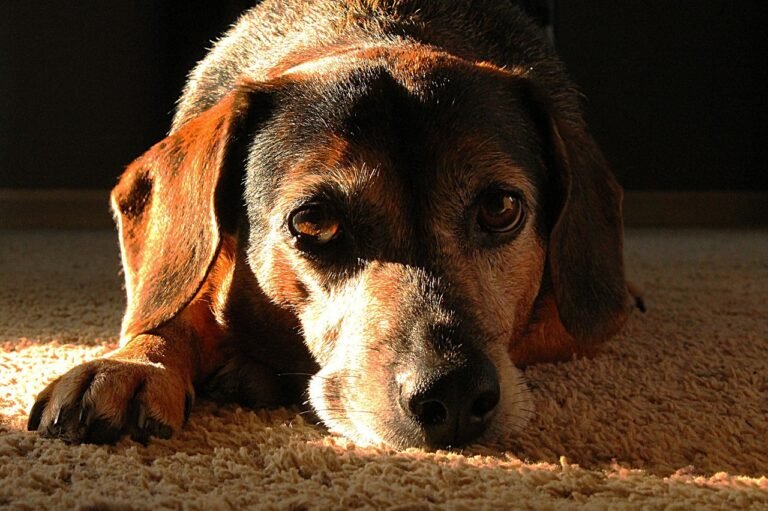
Third night running, she’s in the bath. Not the heated blanket, not the sunny patch by the radiator, not the airing cupboard she’s used every winter for six years — the cold, empty, enamel bath. She’s curled at the plug end, and she doesn’t move when you come in.
Most articles about this file it under cats being cats. That’s a comfortable answer and it’s often right. But it skips the part that makes the behaviour interesting, which is that a bath is a genuinely strange place for a cat to choose, and cats don’t usually change where they sleep for no reason.
The short version
- Cats are built to seek heat. Their comfort range runs roughly 30–38°C (86–101°F) — far warmer than your house. Choosing cold enamel goes against that.
- A bath offers two quite different things: a cold surface, or an enclosed hiding place with one entrance. Which one she’s after changes what it means.
- A cat who is simply stressed shows almost the same signs as a cat who is ill. In one study, healthy cats with a disrupted routine averaged 1.9 sickness behaviours a week against 2.0 for chronically ill cats.
- So you cannot tell stress from illness by watching. What you can do is check the specific things that separate them.
- New hiding in a cat who never hid, especially one over seven, is a vet conversation — not a quirk.
On this page
Why a bath is a strange choice
Start with the physiology, because it makes the rest obvious.
Cats are desert-descended animals and they are comfortable at temperatures that would have you sweating. The American Veterinary Society of Animal Behavior puts the feline thermoneutral zone — the range where a cat maintains its body temperature without spending energy on it — at roughly 86 to 101°F. Dogs sit nearer 68 to 95°F. Humans, wearing clothes, are comfortable around 64 to 72°F.
Which is the point. A cat’s default setting is find the warmest available surface. An empty bath is the opposite: enamel or acrylic, unheated, and unusually good at pulling heat out of whatever lies on it. A cat lying there is choosing something she would normally avoid.
That doesn’t make it an emergency. It makes it a deliberate choice, and worth a minute’s thought about which thing she’s actually choosing.
The two things a bath offers
Baths and basins tick two completely separate boxes, and the one she’s after tells you what to look at.
| What she may be after | How it looks | What it points to |
|---|---|---|
| The cold surface | Lying flat and stretched out, belly and flank in contact, often on her side | She is trying to lose heat — a warm room, a fever, or a metabolic reason for feeling hot |
| The enclosure | Curled tight in the corner or at the plug end, tucked in, watching the door | She wants somewhere defensible with one way in — stress, noise, a new animal, feeling vulnerable |
| The quiet | Only at particular times — evenings, when guests are over | Something in the house has got busier or louder than she can cope with |
| The water | Sitting by the tap, licking damp enamel, waiting for a drip | Drinking behaviour — worth watching her water intake closely |
Posture is the cheapest diagnostic you have. Flat and spread out means heat dumping. Curled and tucked means hiding. They look superficially similar at 3am and they mean different things.
The last row deserves a mention of its own. Some cats develop a habit of hanging around taps and sinks, and while it’s often just preference for moving water, a genuine increase in thirst is one of the more useful early signals in an older cat. We went into that in what it means when a cat sits by the water bowl without drinking.
Why you can’t tell stress from illness by watching
Here’s the study that changes how you should read this behaviour.
Researchers at Ohio State followed 32 cats — 12 healthy, 20 with a chronic bladder condition — over 77 weeks, recording “sickness behaviours” such as vomiting, going outside the litter tray, eating less, and avoidance. Then they disrupted the cats’ routines: changing the person caring for them, delaying feeding by three hours, removing playtime and music.
In normal weeks, the healthy cats averaged 0.4 sickness behaviours and the chronically ill cats 0.7. In disrupted weeks, the healthy cats averaged 1.9 and the chronically ill cats 2.0. Across the whole group, routine disruption came with a 3.2-fold increase in the risk of sickness behaviours.
Read that again, because it undercuts a lot of confident internet advice. A perfectly healthy cat whose week has been upset behaves almost exactly like a cat with a chronic illness. So “she’s just stressed, it’s nothing” and “something is wrong with her” produce the same observable cat.
The practical consequence isn’t to panic. It’s to stop trying to settle the question by watching her, and instead check the handful of things that actually separate the two: her weight, her appetite, her water intake, her litter tray, and her age.
When it’s probably nothing
Plenty of cats sleep in baths and basins their whole lives and are entirely well. The reassuring pattern looks like this:
- She’s always done it, or she started during a heatwave and it’s genuinely warm
- She’s young, and everything else is unchanged — eating, drinking, playing, using the tray normally
- She still comes out for meals, still greets you, still does the rest of her routine
- She’s added the bath to her rotation rather than abandoning everywhere else
The last one matters more than people realise. Healthy cats cycle between several sleeping spots over a week. A cat who has replaced all her spots with one hiding place is telling you something different from a cat who has simply added one.
When to ring the vet
Two specific things are worth naming. Cornell’s Feline Health Center describes hyperthyroidism as common in middle-aged and older cats, with weight loss, increased appetite, increased thirst and urination, vomiting, diarrhoea and hyperactivity among its signs, and an affected cat’s coat often looking unkempt, matted or greasy. A cat eating well and losing weight is the classic picture, and it is very easy to mistake for a cat who is simply getting old.
The second is pain. International Cat Care is blunt about behaviour change generally: any change, particularly a dramatic one, shouldn’t be ignored, and a previously confident cat who starts hiding warrants a vet check to rule out illness or pain before it’s put down to anxiety. A sore cat picks somewhere defensible, and a smooth-sided bath with one approach is exactly that. If she’s also stopped jumping, read what it means when a cat stops jumping on the counter — reduced jumping and new hiding often turn up together.
What to do this week
- Look at her posture, twice. Flat and stretched, or curled and tucked? Note which, at two different times of day.
- Weigh her and write it down. Repeat in a fortnight. A drop of more than a few percent in a healthy-looking cat is worth a call.
- Count the water. Fill the bowl to a marked level and see how far it drops in 24 hours. A sudden increase matters more than the absolute amount.
- Check the tray. Bigger clumps, more of them, or anything outside the tray are all information.
- Work out what changed three weeks ago. New person, new pet, building work, a move, a different food, a visitor who stayed. Cats react on a delay, so look further back than you think.
- Give her a better option. If she wants enclosure, a covered bed or a box on its side somewhere high and quiet may beat the bath. If she wants cool, a tiled floor out of the way works.
- Don’t shut the bathroom door. Removing the hiding place doesn’t remove the reason she wanted one, and it usually just moves her somewhere you can’t see her.
Common questions
Should I stop her sleeping in the bath?
Not by force. If she’s well and it’s a preference, there’s no harm in it. If she’s hiding, closing the door takes away the refuge without addressing what she’s hiding from — she’ll find somewhere less convenient instead.
She only does it in summer. Is that different?
Yes, that’s the most benign version. A cat dumping heat onto cool enamel in hot weather is doing something sensible. Make sure she has shade, water and a cool spot she can reach without climbing.
Could it be the litter tray?
It’s worth ruling out. Cats who find their tray unpleasant sometimes start using baths and shower trays for toileting, which can look like sleeping there if you only see the aftermath. Check whether the bath is dry.
She’s started sleeping in the sink instead of with me. Is she unwell?
Maybe, and it’s worth checking. But withdrawal from contact is also a classic stress response, and the research above shows a stressed healthy cat looks much like an ill one. Check weight, appetite, thirst and tray, then decide.
How long should I watch before ringing the vet?
If everything else is normal, a week of observation is reasonable. If she’s over seven, has never hidden before, or anything else has changed alongside it, don’t wait — ring now.
The bottom line
A cat choosing cold enamel is choosing against her own thermostat, and that’s worth a moment’s attention rather than a shrug. Look at whether she’s spread out or tucked in, weigh her, watch the water and the tray, and think about what changed a few weeks ago. Often it is nothing. But “cats are weird” is a conclusion, not a check — and it’s the wrong one often enough to be worth the five minutes.
Sources
- American Veterinary Society of Animal Behavior — the feline thermoneutral zone and indoor temperature.
- Stella J, Buffington CAT et al., Ohio State University, 2011 — sickness behaviours in 32 cats over 77 weeks following routine disruption.
- Cornell Feline Health Center — hyperthyroidism in cats: prevalence and clinical signs.
- International Cat Care — anxious cats, hiding behaviour, and when behaviour change needs a vet.