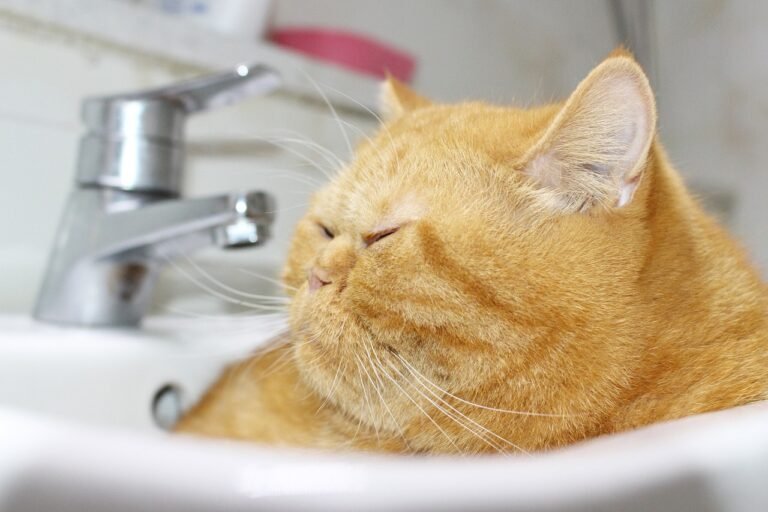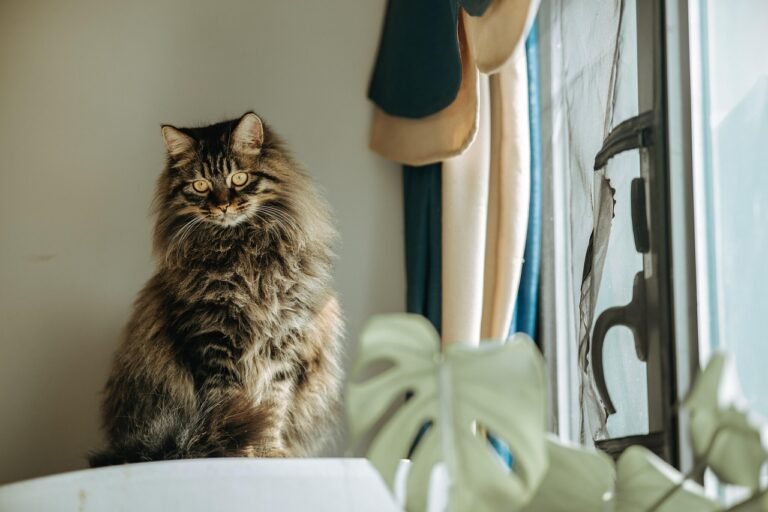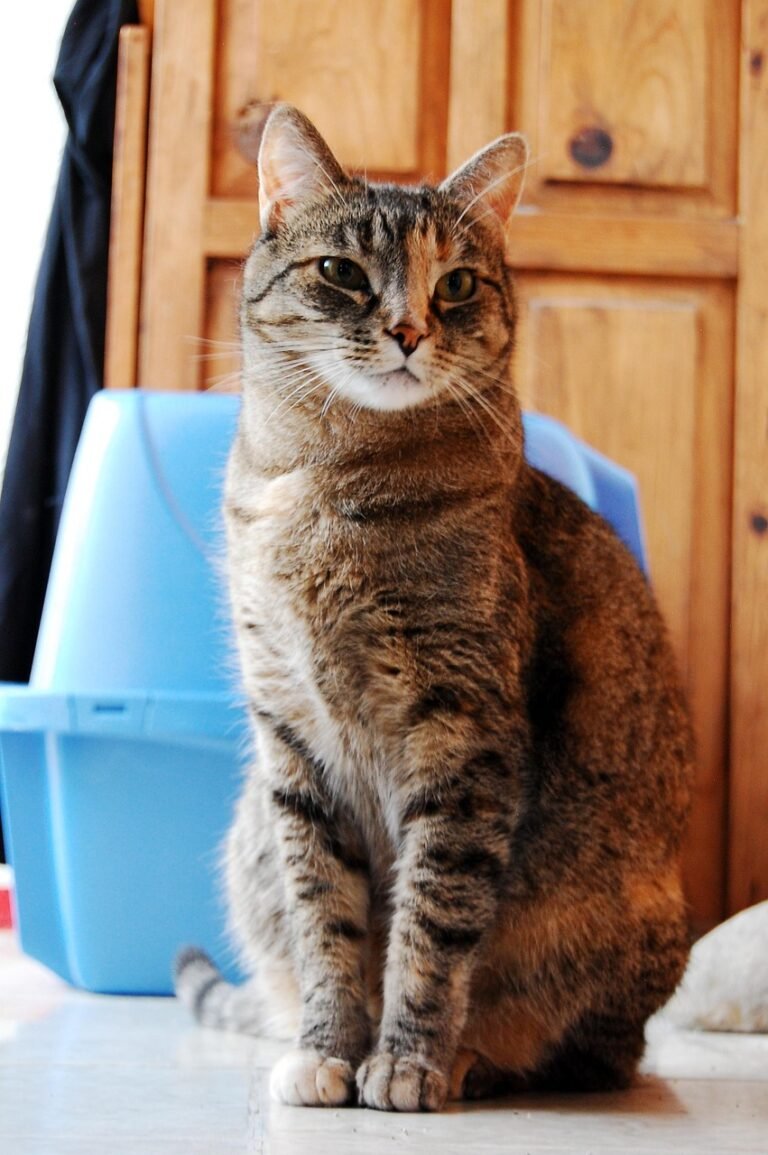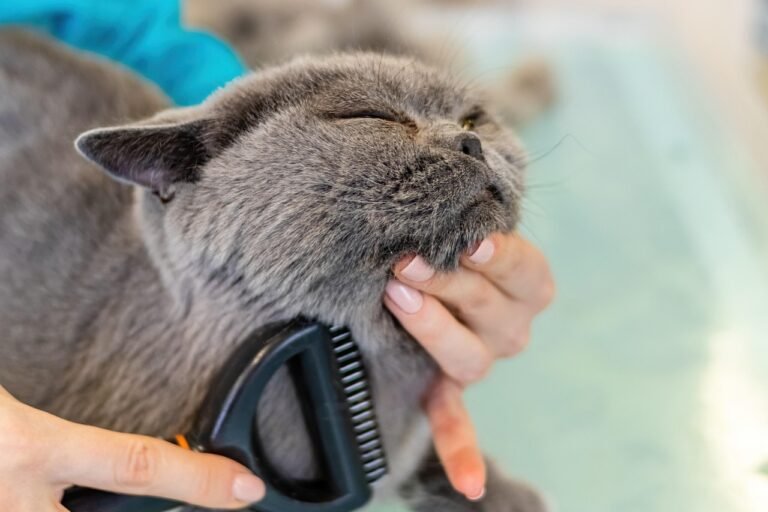
She still gets onto the worktop. She just doesn’t do it from the floor any more. Now it’s floor to the stool, stool to the worktop, and you’d struggle to say when that changed. Sometime in the spring, maybe. It’s not that she can’t get up there. She’s found a better way.
That’s the whole problem with cats and joint pain. A limping dog gets an appointment. A cat doesn’t limp — she edits. She stops using the top of the wardrobe and starts sleeping on the sofa. She takes the stairs instead of the banister. She jumps eighty centimetres where she used to do a hundred and twenty, and because she still lands neatly, nobody registers it as a symptom.
The research on this is genuinely uncomfortable reading, and it points in one direction: cats hide arthritis extremely well, and owners miss it until somebody tells them exactly what to look at.
The short version
- Reduced jumping is one of the six items on a validated screening checklist for joint pain in cats.
- Degenerative joint disease is common: one radiographic study found it in 74% of cats examined.
- Owners using that checklist without any briefing spotted painful cats about 56% of the time. Briefed owners spotted 99%.
- Sudden inability to use the back legs, with crying, is an emergency — likely a clot, not arthritis.
- Never give a cat paracetamol or ibuprofen. Cats cannot process them the way we do, and the consequences are severe.
What’s in this guide
Cats don’t limp, they edit
Dogs are honest about pain in a way cats aren’t. A dog with a sore elbow limps on it, and limping is legible — you see it, you book something. Cats hardly ever do that. What they do instead is quietly reduce the demands they place on the sore joint, and because a cat’s daily routine is entirely self-directed, they can do that without anyone noticing.
The behaviours that change are small and easy to explain away:
- Using a chair or a windowsill as a staging post instead of going up in one
- Choosing lower places to sleep, and gradually abandoning the highest spot in the house
- Hesitating at the top before jumping down, or lowering herself rather than dropping
- Landing heavily, or scrabbling on the last part of the climb
- Missing occasionally, which owners tend to find funny rather than concerning
- Going out less, or spending longer in one spot
- Litter tray accidents, if getting into a high-sided tray has become hard work
Read that list again and notice how many of them sound like a cat getting older, or a cat being a cat. That’s exactly why this goes unreported for years.
The six questions worth asking
There is a validated tool for this, and the most useful thing about it is how short it is. The Feline Musculoskeletal Pain Screening Checklist asks owners about six activities.[1]
- Does your cat run normally?
- Does your cat jump up normally?
- Does your cat jump down normally?
- Does your cat climb up stairs normally?
- Does your cat climb down stairs normally?
- Does your cat chase moving objects normally?
Two of the six are jumping. If you came to this article because your cat has stopped getting onto the counter, you have already answered one of the questions that veterinary researchers use to flag cats likely to be in pain.
Now the finding that makes this article worth writing at all.
Specificity was high in both groups — around 97% for uninformed owners — which means that when an owner did say “yes, something’s off with jumping,” they were nearly always right. The failure mode isn’t false alarms. It’s silence.
How common this actually is
Common enough that “she’s just getting older” is usually a description of the problem rather than an explanation of it.
Two details from that study are worth carrying with you. The first is the elbow, which surprises most people — we think hips when we think arthritis, and in cats the elbow is the more frequent offender. An elbow is heavily loaded on landing, which is precisely why jumping down often becomes reluctant before jumping up does.
The second is that some findings were only visible on particular radiographic views, which tells you something about how easy this is to under-diagnose even with imaging, let alone by watching a cat walk across a consulting room.
What else it could be
Joint pain is the likeliest answer in a middle-aged or older cat, but it isn’t the only one, and two of these are worth knowing by name.
1Weight
An overweight cat is loading every joint harder and has less muscle to power a jump. It’s also the factor you have most control over. Weight loss in cats needs to be done carefully and slowly — crash dieting a cat can cause serious liver problems — so this is a plan to make with your vet rather than alone.
2Diabetes affecting the nerves
Cornell describes a distinctive complication of uncontrolled feline diabetes: nerve damage in the hind limbs producing a plantigrade stance, where the cat walks or stands with the hocks on or close to the ground.[3] A cat standing like that cannot generate a normal jump.
Cornell notes this is uncommon, occurs in uncontrolled cases, is not painful, and often resolves with treatment — so it’s a reason to look, not to panic. Weight loss despite a good appetite, and increased thirst and urination, are the signs that usually come first.
3Muscle loss
Older cats lose muscle mass, and a cat can lose a surprising amount of it before an owner notices under the coat. Run your hands down her spine and over her hips. If the bones feel sharper than they did a year ago, that’s worth mentioning — it often travels alongside a chronic condition rather than pure ageing.
4Eyesight
Jumping onto a narrow surface needs depth perception. Cats with failing vision often become cautious about height before anything more obvious appears, and are most hesitant in dim light. Feline high blood pressure can damage vision quite suddenly, and it’s routinely checked in older cats.
5Surfaces
Occasionally the answer really is the floor. A polished or tiled take-off area gives no grip, and one bad slip is enough for a cat to stop attempting a jump she can physically make. A mat in the take-off zone is a cheap thing to rule out.
The version that’s an emergency
Arthritis arrives over months. If your cat’s back legs stop working over minutes or hours — dragging, unable to stand, crying out, back feet cold or pads looking pale or bluish — that is a different problem entirely, and it needs an emergency vet immediately.
The most likely cause is a blood clot. Cornell describes clots in cats most commonly obstructing blood flow to the hind limbs, causing acute hind limb pain or, in severe cases, paralysis — a serious and potentially life-threatening complication of underlying heart disease.[4] It is intensely painful and time matters.
Because that heart disease is usually silent beforehand, it’s worth knowing the one home measurement that can flag it early. We cover it in counting your cat’s breathing rate while she sleeps.
What to do this week
- Answer the six questions honestly. Run, jump up, jump down, upstairs, downstairs, chase. Compare against what she did a year ago, not last week — this creeps.
- Measure the heights. Note what she does jump onto and what she’s stopped using. “She’s given up the wardrobe at 1.6m but still does the bed at 60cm” is a far better history than “she seems stiff.”
- Film a jump up and a jump down. Landing matters as much as take-off. Cats are at their most convincing in a consulting room and at their most honest at home.
- Make the routes easier now. A stool by the windowsill, a step to the bed, a litter tray with one low side. This costs nothing and tells you something: if she starts going to high places again once the route is easier, she was avoiding the jump, not the destination.
- Check the tray. High sides and a distant location are a common hidden reason for accidents in arthritic cats, and accidents get punished far more often than they get investigated.
- Book the appointment and use the word “pain.” Ask whether a trial of pain relief is appropriate. A cat who starts jumping again on a short course has effectively given you the diagnosis, and vets use exactly that logic.
This matters more in cats than in any other pet. Cats have limited capacity for glucuronidation — the pathway that clears these drugs — which the Merck Veterinary Manual identifies as the reason cats are especially susceptible to acetaminophen (paracetamol) toxicosis. Toxicosis is described at 40–50 mg/kg, with clinical signs reported in some cats at doses as low as 10 mg/kg, producing methaemoglobinaemia, weakness, facial or paw swelling, difficulty breathing and liver damage.[5]
Cats are also susceptible to ibuprofen at roughly half the dose required to poison a dog.[5] There is no safe home dose of either. Feline pain relief exists and is effective — it just has to be prescribed.
Common questions
My cat still jumps, just not as high. Is that a problem?
It’s worth investigating. Reduced jumping is one of six activities on a validated screening checklist for joint pain in cats, and cats compensate rather than complain — using a staging post, choosing lower perches or abandoning the highest spot in the house are all versions of the same signal.
Isn’t my cat too young for arthritis?
Possibly, but the numbers are higher than most owners expect. In one radiographic study, 74% of the cats examined had degenerative joint disease in their limbs, with affected cats averaging around 11–12 years old. It becomes markedly more likely with age, but it is not confined to very old cats.
Why do cats hide joint pain so well?
They don’t limp the way dogs do — they change what they choose to do instead. Since a cat’s routine is entirely self-directed, she can avoid a painful movement without ever showing an obvious sign. That’s why structured questions about specific activities pick this up far better than watching a cat walk.
Can I give my cat a small dose of paracetamol for pain?
No. Cats lack the metabolic capacity to clear it safely, and signs of poisoning have been reported at doses as low as 10 mg/kg. Paracetamol and ibuprofen are both dangerous to cats and there is no safe home dose. Prescribed feline pain relief is available and works.
My cat suddenly can’t use her back legs. What do I do?
Go to an emergency vet immediately. Sudden hind limb failure with crying, dragging, or cold feet is most often caused by a blood clot associated with underlying heart disease. It is extremely painful and the outcome depends on how quickly she is seen.
The bottom line
The evidence here is unusually clear about what actually helps: not a new supplement, not a different bed, but an owner who knows which six things to look at. Attention roughly doubled the detection rate in the research, and it costs nothing.
Think back a year. Where did she sleep, and how did she get there? If the answer has quietly changed, that’s your reason to book. Cats live a long time with this, and they live much better with it treated than tolerated.
Sources & references
- Enomoto, M., Lascelles, B. D. X., Gruen, M. E. Development of a checklist for the detection of degenerative joint disease-associated pain in cats. Journal of Feline Medicine and Surgery (2020). journals.sagepub.com
- Frontiers in Veterinary Science. Retrospective Radiographic Study of Degenerative Joint Disease in Cats: Prevalence Based on Orthogonal Radiographs (2020). frontiersin.org
- Cornell University College of Veterinary Medicine, Feline Health Center. Feline Diabetes. vet.cornell.edu
- Cornell University College of Veterinary Medicine, Feline Health Center. Hypertrophic Cardiomyopathy. vet.cornell.edu
- Merck Veterinary Manual. Toxicoses From Human Analgesics in Animals. merckvetmanual.com
General information, not veterinary advice. Never give human painkillers to a cat, and treat sudden hind limb weakness as an emergency. The canine version of this problem is covered in dogs who stop jumping on the sofa, and there’s more on the quiet signals cats give in our cat care section.