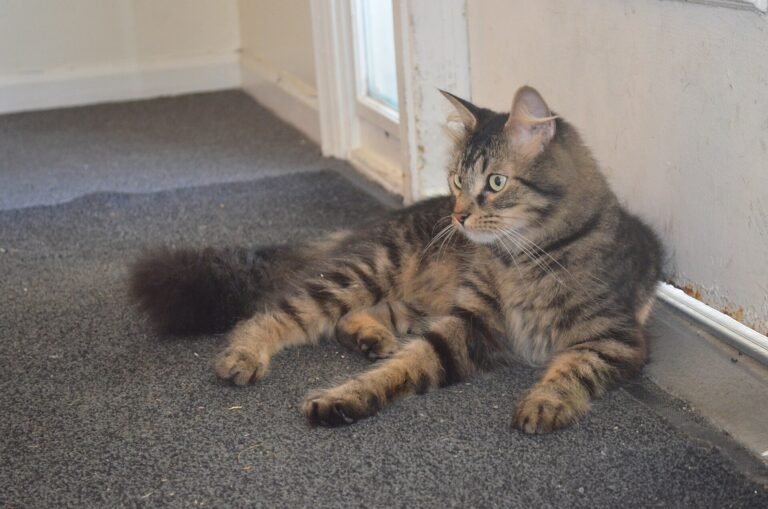
First you notice the fur on the belly looks thin. Then there is a bald stripe down the inside of the back legs, and your cat seems to be licking constantly. A lot of people are told, or read online, that this is stress. Sometimes it is. But research shows that in most cats, there is a medical reason behind it, and it is worth finding first.
What overgrooming looks like
You may see the result rather than the licking itself: thin or stubbly fur, or bald patches, sometimes with normal looking skin and sometimes with red, scabby or broken skin. Note where the patches are and show your vet.
The study that changed the picture
It was a small study of cats seen at a referral centre, but its message is clear and widely cited: check for medical causes before blaming stress.
Common causes of overgrooming
| Cause | Notes |
|---|---|
| Adverse food reaction | The most common cause in the 2006 study |
| Environmental allergy (atopy) | Also identified in the 2006 study |
| Stress or anxiety | A purely behavioural cause was found in only 2 of 21 cats |
| Stress plus a medical cause | 3 of 21 cats had both |
The study did not list every possible cause. Your vet will also consider other common reasons for itchy or sore skin, so the list above is a starting point, not a diagnosis.
What your vet may do
If your vet suggests a food trial, ask exactly how long to run it and what your cat may and may not eat during it.
What you can do at home
- Take photos. Photograph the patches every week so you and your vet can see whether things improve.
- Note what changed. New food, new litter, a house move, a new pet, or tension between cats. If your cats squabble, see why cats groom each other and then fight.
- Follow your vet’s plan exactly. If your vet starts a food trial, make sure everyone in the house knows the rules.
- Do not punish licking. It will not stop an itch and can add stress.
- Reduce stress where you can. RSPCA Australia advises one of each resource per cat plus one extra, in separate places, in multi-cat homes. That can help if stress turns out to play a part.
- Handle gently. If your cat dislikes being brushed or handled, our guide to a cat that hates being brushed may help with checking its coat.
FAQ
Why is my cat licking its fur off?
Often because it is itchy, most commonly from a food reaction or allergy, according to a 2006 study. Stress can play a part, but a medical cause should be ruled out first.
Is overgrooming in cats caused by stress?
Sometimes, but less often than people think. In the 2006 study, only 2 of 21 cats referred for suspected stress-related hair loss had a purely behavioural cause.
Will my cat’s fur grow back?
Ask your vet what to expect for your cat once the cause is found and treated.
What is a food trial?
A period on a vet-recommended diet, used to test whether food is causing the itch. Your vet will explain how to run it.
When should I see the vet?
As soon as you notice bald patches, sore or broken skin, or constant licking.
Sources
This article is for general information and is not a substitute for advice from your veterinarian.