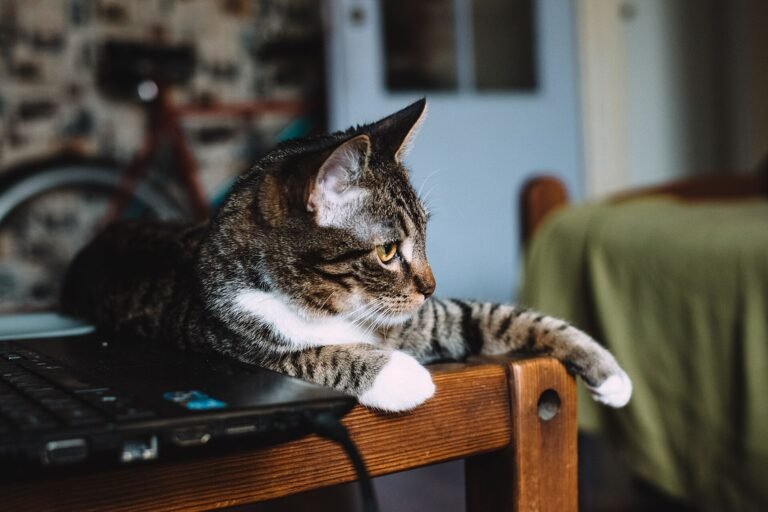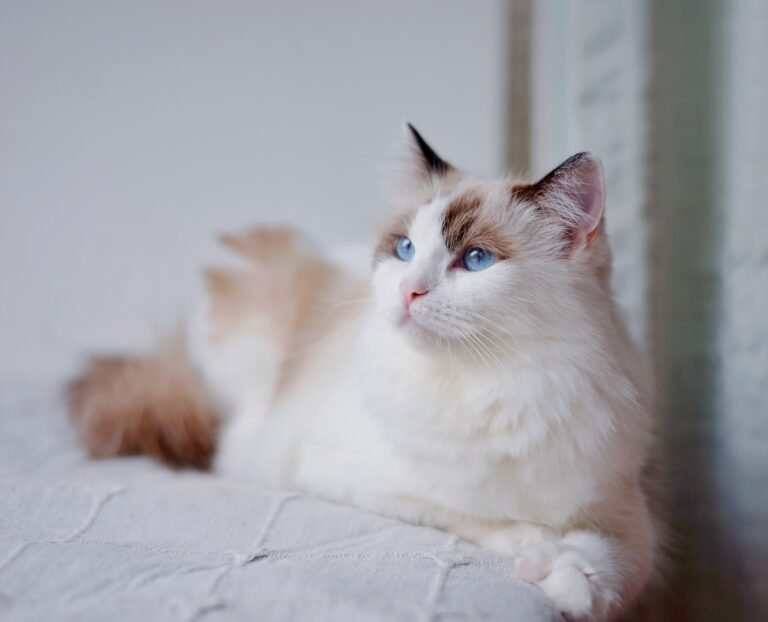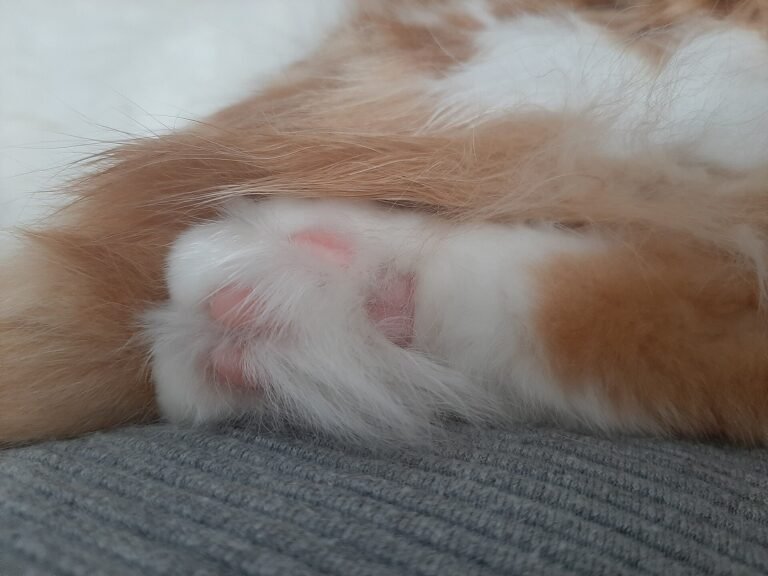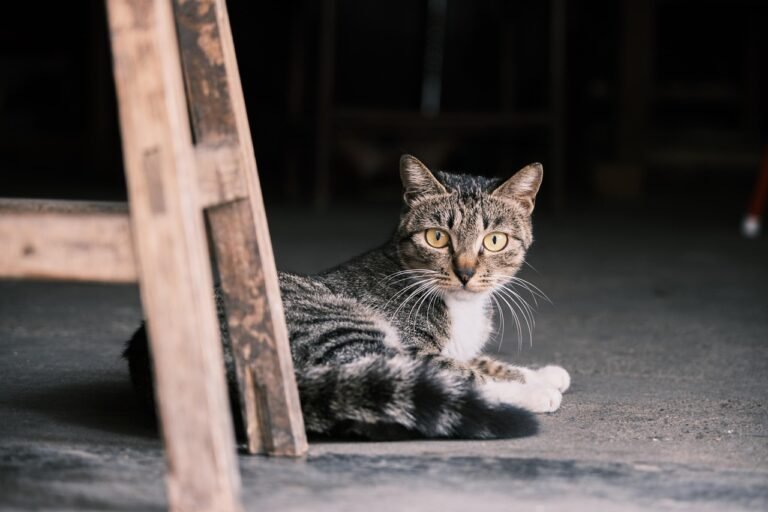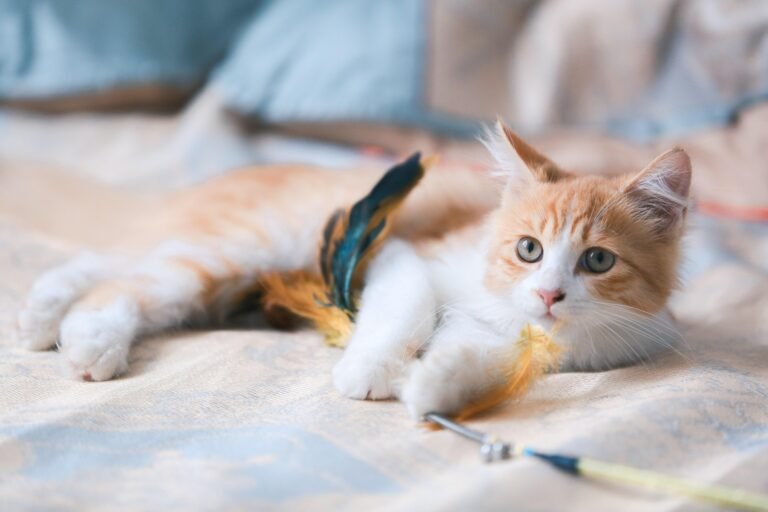
Every evening she settles on the same fleece throw, starts kneading, then takes a mouthful of it and sucks, eyes half shut, purring like an engine. The corner is permanently damp. It looks peaceful. Then one day you notice a hole in it, and you start wondering where the missing bit went.
That question is the whole article. A cat sucking on a blanket is usually harmless, and plenty of adult cats do it for comfort. A cat chewing and swallowing fabric is a different thing with a name, pica, and it can end in surgery. The two can look identical from across the room, so the first job is to tell which one you have.
The short version
- Sucking without swallowing is usually a comfort behaviour. If the fabric is wet but intact, it is mostly harmless.
- Chewing holes and swallowing fabric is pica. International Cat Care warns it can cause “a blockage in the intestines, which can be life-threatening if left untreated”.
- Oriental breeds are over-represented. International Cat Care names Siamese, Burmese, Tonkinese and other Oriental types, though any cat can do it.
- A 2015 study of 204 Siamese and Birman cats linked wool-sucking to early weaning and small litters in Birmans, to medical conditions in Siamese, and found an abnormally intense appetite in all affected cats.
- Vomiting, constipation, diarrhoea, lethargy or loss of appetite in a fabric-eater needs a vet the same day.
On this page
Sucking or eating: which is it?
| What you see | Likely |
|---|---|
| Kneading, purring, sucking one spot, fabric wet but whole | Comfort sucking. Usually harmless. |
| Small holes, fraying, chewed edges | Chewing. Watch closely, she may be swallowing some. |
| Missing pieces, threads gone, holes getting bigger | Pica. She is eating fabric. Vet check. |
| Also chewing plastic bags, cardboard, shoelaces, hair ties | Pica with other targets. Higher risk of blockage. |
| Fabric fragments in vomit or faeces | Definitely swallowing. Vet check, and fabric-proof the house now. |
International Cat Care describes pica as “a cat eating non-edible materials e.g. fabric such as wool, or harder materials, such as cardboard or plastic”. The list of things affected cats eat is long: natural and synthetic fibres, “rubber, wood, leather, plastic, cellophane, paper and cardboard”, plus “shoelaces, strings and thread”. Threads and strings are particularly dangerous.
Why cats do it
The kneading and sucking look exactly like a kitten feeding at its mother, which is why early weaning comes up again and again when this is discussed. The research on the more serious version, compulsive wool-sucking and eating, is more specific.
Borns-Weil and colleagues studied 204 Siamese and Birman cats in a case-control study published in the Journal of Veterinary Behavior in 2015. Their findings:
In Birmans: “Early weaning and small litter size were associated with an increased risk of wool-sucking”. The researchers found this link in Birmans only.
In Siamese: “the presence of a medical condition was associated with an increased risk of wool-sucking.”
In all affected cats: “The presence of an abnormally intense appetite was seen in all affected cats.” This is the detail most owners recognise straight away.
Not linked: physical traits such as head shape or coat colour showed no relationship with the behaviour.
International Cat Care’s guide to pica lists the wider range of possible causes: genetics, stress, boredom and anxiety, medical conditions including anaemia, dietary problems, dental pain, and early weaning and small litter size. It also notes that kittens “as young as three months old (sometimes, even younger) can start chewing their bedding”, and that some grow out of it while others do not.
If it is harmless sucking
If the fabric stays whole and she is otherwise healthy, there is no need to stop it. It is a self-soothing behaviour, and taking away the one blanket she does it on can create more stress than the habit ever did.
- Give her a dedicated blanket. One she is allowed to suck, washable, in her favourite spot. Keep it there so the behaviour has a home.
- Check it weekly. Look for thinning, holes and loose threads. The moment it starts to come apart, replace it. Loose threads are the danger.
- Avoid knitted wool and loose weaves. Tight fleece is harder to tear into pieces than a chunky knit.
- Watch for a change. Sucking that becomes chewing, or more frequent sucking at a time of upheaval, is worth noticing. It can be an early stress signal.
If she is eating fabric
This needs a different response, and it starts at the vet. International Cat Care lists medical causes including anaemia, dietary problems and dental pain, and the 2015 study linked wool-sucking in Siamese cats to an underlying medical condition. Rule those out before treating it as behaviour.
- Vet check first. Mention exactly what she eats and how much, and whether she seems unusually hungry. That intense appetite was present in every affected cat in the study.
- Pica-proof the house. International Cat Care uses exactly that phrase. Laundry in closed baskets, wool jumpers in drawers, no hair ties, shoelaces, string, plastic bags or ribbon left out. Keep her out of rooms you cannot clear.
- Give her something safe to chew. Ask your vet about safe chew items or diet changes. Some cats are satisfied when they have a legitimate, safe outlet.
- Increase play and enrichment. International Cat Care recommends more play with interactive toys and “optimising your cat’s environment”. Food puzzles add effort to eating, which matters for a cat with an unusually strong appetite. Our guide to introducing a puzzle feeder covers how to start.
- Reduce stress. Changes in the household, tension with another cat, or long hours alone can all feed the behaviour. If another cat is involved, our guide to reading tension between cats may help.
- Ask about a referral. International Cat Care notes that some cats benefit from a veterinary behaviourist, and that medication for anxiety is sometimes used. That is a conversation for your vet, not a home decision.
Do not punish her for it. Telling off or spraying a cat for chewing fabric adds stress, and stress is one of the drivers. It also teaches her to do it out of sight, which is the most dangerous outcome of all.
The signs that mean go now
International Cat Care lists the signs that a swallowed item may be causing a problem: “vomiting”, “diarrhoea”, “constipation”, lethargy and reduced appetite. In a cat known to eat fabric, any of these is a same-day vet visit. A blockage can become life-threatening quickly.
If you see a thread or string coming from her mouth or bottom, do not pull it. Dr Yvette Bell BVetMed MRCVS, writing for Vet Help Direct, is blunt: “The key take-home if you see thread hanging from your cat’s mouth, is NOT to pull it.” If it is stuck further in, pulling risks it cutting through the gut. Go to the vet.
Common questions
Why does my cat suck on blankets?
Usually for comfort. The kneading and sucking mimic a kitten feeding. If the fabric stays whole and your cat is healthy, it is generally harmless. If she is chewing holes and swallowing pieces, that is pica and needs a vet check.
Is it bad if my cat sucks on blankets?
Sucking alone is not usually a problem. The risk comes when she swallows fabric or threads, which can cause an intestinal blockage. Check the blanket regularly and replace it when it starts to come apart.
Which cats are most likely to suck or eat wool?
International Cat Care says it is more common in Siamese, Burmese, Tonkinese and other Oriental types, although any cat can do it. A 2015 study linked it to early weaning and small litter size in Birmans and to medical conditions in Siamese cats.
Should I stop my cat sucking on blankets?
Not if it is harmless sucking. Give her a dedicated, tightly woven blanket and check it weekly. If she is eating fabric, see a vet and fabric-proof your home.
What are the signs my cat has swallowed fabric?
Vomiting, diarrhoea, constipation, lethargy or loss of appetite. In a cat that eats fabric, any of these needs a vet the same day. Never pull a thread or string from her mouth or bottom.
The bottom line
A cat who sucks a blanket and leaves it whole is soothing herself, and the kindest thing is to give her a safe blanket and leave her to it. A cat who eats holes in it has pica, which is a medical and safety problem first: vet check, fabric-proof the house, more play and food puzzles, and less stress. Know the warning signs of a blockage, and never pull a thread you can see. Check the blanket once a week. The difference between the two is in the holes.
Sources
- International Cat Care. Pica in cats: definition, breeds more commonly affected, age of onset, materials eaten, risk of intestinal blockage, causes, management and warning signs.
- Borns-Weil S, Emmanuel C, Longo J, Kini N, Barton B, Smith A, Dodman NH. A case-control study of compulsive wool-sucking in Siamese and Birman cats (n = 204). Journal of Veterinary Behavior, 2015;10(6):543-548.
- Bell Y, BVetMed MRCVS, for Vet Help Direct. My cat’s swallowed some string, should I pull it out? Why string should never be pulled.