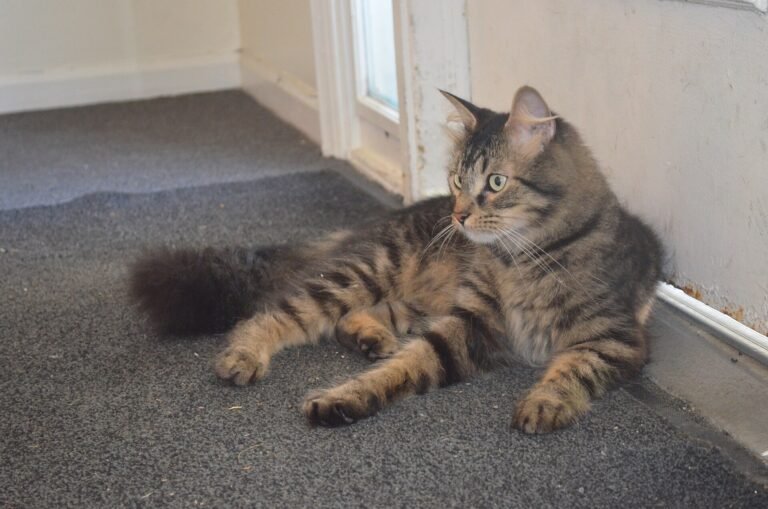
You bought a scratching post. Your cat walked past it, sniffed it once, and went straight back to the arm of the sofa. This is one of the most common complaints cat owners have, and the good news is that it usually has a clear cause. Most of the time the problem is the post, where it stands, or how we react, not the cat.
Why cats scratch at all
Scratching is a normal, necessary behaviour. It removes the old outer layers of the claws, gives the front legs and back a full stretch, and leaves both a visible mark and a scent mark from glands in the paws. That last part matters: scratching is partly a message to other animals, which is why cats like to do it in places that are important to them, in full view.
So the goal is never to stop scratching. It is to move it somewhere you can live with.
6 reasons your cat picks the couch over the post
1. The post is too short
A cat needs to stretch to full length while scratching. In an internet survey of 4,331 cat owners, cats used their preferred scratching item more often when it was a simple upright post or a multi level cat tree at least 3 feet (about 90 cm) tall (Wilson et al., 2016). Many posts sold in shops are well under that.
2. It wobbles
Your sofa does not move when your cat pulls on it. A light post that tips or rocks feels unsafe, and one scare can be enough for a cat to avoid it.
3. The texture is wrong
In the same survey, rope (sisal) was the material cats used most when it was offered. Soft carpet that matches your floor can also confuse the message about what is allowed. Older cats were the exception, and seemed to like carpet more.
4. It is in the wrong place
A study of 1,211 single cat households in France found that posts placed in areas the cat already used were more effective at redirecting scratching (Demirbas et al., 2024). A post hidden in a spare room does nothing for a cat who wants to mark the living room.
5. Your cat is bored or wound up
The same French study linked high levels of unwanted scratching with long play sessions, a very playful or active personality, and night time activity. The authors suggest that badly timed play may leave cats overexcited. Short, regular play sessions, ended calmly, are a better pattern. If your cat also ambushes your feet, see why your cat attacks your ankles.
6. There is only one post
In a survey of 2,465 owners in the US and Canada, providing more scratching posts was associated with fewer reports of unwanted scratching (Cisneros et al., 2022). One post for a whole home is often not enough.
What makes a post a cat will actually use
| Feature | Aim for | Why |
|---|---|---|
| Height | At least 3 ft (90 cm) | Room for a full stretch |
| Stability | Heavy base, no wobble | Cats avoid things that move |
| Material | Sisal rope first; try cardboard too | Rope was used most when offered |
| Shape | Simple upright post or tall cat tree | Linked with more use in the survey |
| Location | Next to the spot being scratched | Same territory, same message |
| Number | More than one | Linked with fewer problems |
The step by step redirect plan
- Find the favourite spots. Note every place your cat scratches and whether it is upright or flat.
- Put the new post right there. Directly in front of or beside the damaged sofa arm. You can move it a little at a time later, once the habit is set.
- Make the sofa less appealing for now. Cover the spot with a throw, plastic sheet, or double sided tape so it is no longer the best option.
- Make the post more appealing. Rub catnip or drag a wand toy over it. In the North American survey, applying an attractant such as catnip or pheromones to the right places was associated with fewer reports of unwanted scratching.
- Reward every use. A treat or calm praise right after your cat scratches the post. Rewarding appropriate scratching was associated with fewer problems in the same survey.
- Add posts near sleeping spots. Many cats stretch and scratch right after waking up.
- Keep claws in shape. Regular trims reduce damage while you retrain. If that is a battle, our guide on a cat who will not let you trim her claws can help.
- Give it time. Expect a few weeks. Only remove sofa covers once your cat has been using the post reliably.
What makes it worse
Declawing is not a fix. It is the amputation of the last bone of each toe and is opposed as an elective procedure by veterinary organisations, including the American Association of Feline Practitioners.
Boredom also tends to show up in more than one way. If your cat is clearing your shelves as well as shredding the sofa, read why cats knock things off tables, and consider food puzzles; here is what to do if your cat will not use a puzzle feeder.
FAQ
Why does my cat scratch the couch right in front of me?
Scratching is partly a visual and scent signal, and cats often scratch when excited or when greeting you. It may also have learned that it gets your attention. Calmly redirect to the post and reward that instead.
How tall should a scratching post be?
At least 3 feet (about 90 cm). A large owner survey found cats used upright posts or cat trees of that height more often.
Sisal or carpet?
Sisal rope was the material cats used most when it was offered. Older cats in the survey seemed to prefer carpet, so offer both if you are unsure.
How long does it take to stop a cat scratching furniture?
Usually a few weeks of consistent setup, covering the sofa, and rewarding the post. Keep the covers on until the new habit is solid.
Should I spray my cat with water when it scratches the sofa?
No. Punishment, including verbal and physical correction, was linked with more unwanted scratching in a 2022 survey of 2,465 owners, not less.
Sources
- Wilson C, Bain M, DePorter T, Beck A, Grassi V, Landsberg G. Owner observations regarding cat scratching behavior: an internet-based survey. Journal of Feline Medicine and Surgery, 2016. Abstract
- Cisneros A, Litwin D, Niel L, Stellato AC. Unwanted scratching behavior in cats: influence of management strategies and cat and owner characteristics. Animals, 2022;12(19):2551. Full text
- Demirbas YS et al. Evaluating undesired scratching in domestic cats: a multifactorial approach to understand risk factors. Frontiers in Veterinary Science, 2024. Full text
- American Association of Feline Practitioners. End of elective declawing. Page
This article is for general information and is not a substitute for advice from your veterinarian.