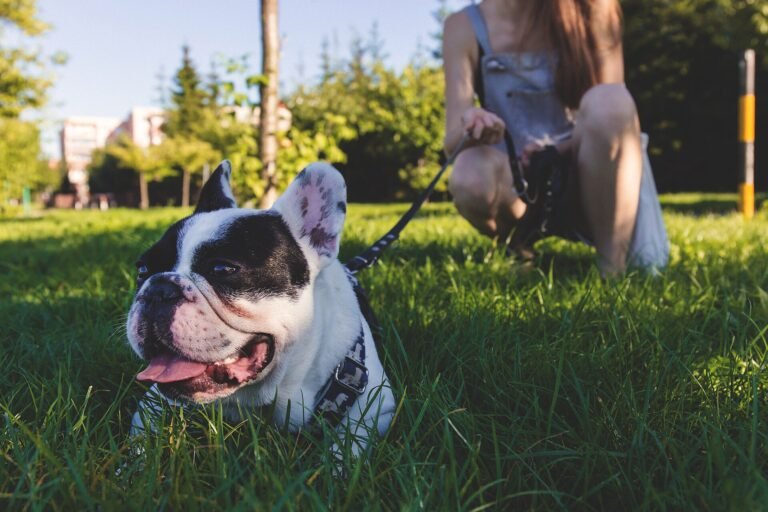
The dog gets to the kitchen doorway and stops. Not a dramatic stop — he just doesn’t come in. You call him and he looks at you, wags a bit, and stays exactly where he is. Yesterday he slept on that floor for four hours.
It’s an unsettling thing to watch, and the internet’s favourite explanation is that dogs sense things we can’t. Which is true, in a narrow and very boring way: they hear higher frequencies than we do and they smell things we’ll never smell. But “he senses something” is where most articles stop, and it’s the least useful place to stop, because it gives you nothing to do on Tuesday morning.
Here’s the more practical framing. A dog who has suddenly become afraid of one specific place is telling you one of three things: something happened there that you didn’t see, something is there that you can’t perceive, or something is wrong with the dog. Those are roughly in order of likelihood. They’re almost exactly the reverse of the order you should check them in.
The short version
- Rule out the dog before you investigate the room. Sudden behaviour change in an adult dog is a medical question first.
- Pain, fading hearing or eyesight, and age-related cognitive change all show up as new avoidance of specific places.
- Dogs hear up to around 45,000 Hz; humans stop near 23,000. Plenty of household electronics live in that gap.
- A single frightening second is enough to poison a room. It doesn’t need to have happened while you were watching.
- Do not drag, lure or carry the dog in. Forcing exposure is the one intervention that reliably makes it worse.
What’s in this guide
Get specific about what’s actually happening
Before you can work out why, you need a sharper description than “he’s scared of the living room.” These three patterns point in different directions, and people collapse them into one.
Won’t cross the threshold
Stops at the doorway, won’t enter for food, toys or you. Usually a strong association with the room itself — or with the floor at the entrance.
Enters, but tense
Goes in, stays near the wall, ears back, leaves quickly. Something in there is unpleasant but tolerable — often intermittent, like a sound.
Only goes in with you
Fine when you’re there, won’t go alone. Points more toward general insecurity than to anything about the room.
Then narrow it further. Is it the whole room or one corner? Every time or only in the evening? Only when the heating’s on? Was there a first day, and can you remember what happened that day? Most people can, once they stop and think — a delivery, a party, a plumber, a thunderstorm, the first cold night when the pipes started ticking.
Write it down. Not for sentiment: patterns that are invisible day to day become obvious in a week of notes, and if you do end up in a vet’s office, “he’s been avoiding the kitchen since the 3rd, mostly after 6pm” is a far better history than “he’s been weird.”
Start with the dog, not the room
This is the part most articles bury under nine paragraphs about spirits and static electricity, and it’s the part that actually matters. A behaviour change that arrives suddenly in an adult dog is a medical question until proven otherwise.
1Pain
Dogs don’t limp on principle. They avoid the surface, the movement or the location that hurts. A dog with sore hips learns that the tiled kitchen floor is where his legs slide out from under him, and after a few slips he stops going in. To you it looks like fear of the kitchen. To him it’s a floor that has stopped being safe.
The AAHA pain management guidelines lean heavily on exactly this: behavioural change, observed at home by the owner, is one of the primary ways chronic pain gets caught at all.[1] Dogs are stoic. Avoidance often shows up long before anything you’d call limping.
Test it cheaply. Put down a runner or a bath mat across the room and see whether he’ll walk on that. If a strip of carpet solves the problem in an afternoon, you never had a haunted kitchen — you had a slippery floor and a dog whose joints have changed.
2Hearing or eyesight going
Sensory loss is gradual, but the behaviour it causes can appear overnight, because there’s a threshold where the dog stops being able to make sense of a place. A dog losing vision manages fine in the room he knows until someone moves the armchair. A dog going deaf startles badly when you appear beside him, and starts avoiding rooms where people arrive from behind him.
Low light makes both worse, which is why this so often shows up in the evening and gets blamed on the dark. Rooms with hard reflective surfaces — a glass door, a large mirror, a shiny floor — are the usual first casualties.
3Cognitive change, in older dogs
In dogs over about seven, disorientation is a recognised sign of canine cognitive dysfunction. VCA’s summary of the DISHAA framework lists disorientation and increased anxiety among the core signs, alongside disrupted sleep and altered social interaction.[2] A dog who gets stuck behind furniture, stares at walls, or hesitates at doorways he’s used for a decade isn’t frightened of the room. He’s lost in it.
It’s worth naming because the treatment is different and because there is treatment — diet, supplements and medication all have a role, and none of it works as well if you spend six months trying to counter-condition a dementia symptom.
- The avoidance appeared over a day or two with no obvious trigger
- Your dog is over seven
- There’s anything else new — appetite, sleep, toileting, stiffness, panting, being touchy about being handled
- He’s flinching at things that used to be routine, or reacting to being approached from one side
- Anything looks neurological: circling, head pressing, staring, tremors, sudden imbalance
Then work the room
Once the dog checks out, the room becomes the interesting part. And this is where the “dogs sense things” cliché finally earns its keep, because the sensory gap is real and measurable.
That gap is not theoretical. It is full of household objects. Get down on the floor in that room, stay there for ten minutes with your phone off, and pay attention — you’ll hear more than you expect, and your dog is hearing a layer above that.
| Suspect | Why it bothers a dog | How to test |
|---|---|---|
| Smoke alarm with a dying battery | The low-battery chirp fires every 30–60 seconds, often at a pitch and volume that barely registers to us. A prime cause of dogs abandoning one specific room. | Stand under it for five minutes. Change the battery regardless. |
| Ultrasonic pest repellers | Sold to be inaudible to humans. They are not inaudible to dogs. If someone plugged one in and the avoidance started that week, you have your answer. | Unplug it. Check every socket, including behind furniture. |
| New appliance or electronics | Switch-mode power supplies, LED drivers, fridge inverters and some smart-home hubs whine at frequencies above human hearing. | Kill power to the room at the breaker for an evening and watch what he does. |
| Slippery or new flooring | Laminate, vinyl and tile give no grip. One bad slide is enough. Newly refinished floors also outgas for weeks. | Lay runners or a yoga mat as a temporary path. |
| Boilers, pipes and heating | Ticking, banging and expansion noises that only happen when the system fires — which is why the fear looks like it has a schedule. | Note whether avoidance tracks the heating timer. |
| Reflections and moving light | Low winter sun off a mirror or a TV, headlights sweeping a wall at night. Dogs with fading eyesight are especially reactive to this. | Sit at his height at the hour it happens. |
| Smells | Cleaning products, plug-in fresheners, a new rug, a dead mouse under the floorboards. Citrus and strong solvents are common offenders. | Stop using anything scented in that room for two weeks. |
Swipe the table sideways to see all columns.
The smoke alarm one deserves a special mention because it’s so common and so easy to miss. The chirp is designed to nag humans gently. To a dog it can be a sharp, unpredictable, unlocatable noise that repeats forever, and there is no version of that a dog enjoys. If your dog has recently stopped going into a room that contains a smoke alarm, change the battery before you do anything else. It costs almost nothing and it solves this more often than it has any right to.
The one bad second
The explanation people underrate most is also the simplest: something frightening happened in that room, once, briefly, and probably while nobody was looking.
Fear doesn’t need repetition to stick. A single intense experience is enough to create a lasting association, and dogs are efficient at attaching that association to whatever was around at the time — the place, the floor, the doorway, the sound of the cupboard. A stack of baking trays falling out of a cupboard at 2am. A pan lid. An ironing board going over. The vacuum cleaner tipping. A cat ambushing him. A shock from a badly earthed appliance, which does happen. The dog was alone, it lasted a second and a half, and now the room is a place where the ceiling once exploded.
You will often never find out which one it was, and that’s fine. You don’t have to identify the event to treat it. What matters is recognising that this category exists, because it explains the cases that make no sense — the perfectly healthy young dog, in a room with nothing wrong with it, refusing to walk in.
If the fear is attached to a surface — he’ll enter the room but arcs around one spot on the floor, or leaps the last two feet through the doorway — you’re usually looking at a one-off event rather than an ongoing sensory problem. Ongoing problems produce steady avoidance. One-off events produce oddly specific superstitions.
What to do this week
Assuming the vet has cleared him, or the appointment is booked and nothing looks urgent, this is the practical sequence. It’s deliberately slow. Rushing it is how a two-week problem becomes a two-year one.
- Stop making him go in. No calling him through, no carrying, no putting the food bowl in the middle of the room to force the issue. Every failed crossing teaches him that his fear was justified and that you can’t be trusted at that doorway.
- Fix the obvious physical stuff. Battery in the smoke alarm, unplug the pest repeller, runners on the slippery floor, stop the scented cleaner. Do all of it at once. This isn’t a controlled experiment and you’re not writing it up.
- Feed him near the room, not in it. Bowl in the hallway, well back from the threshold, at a distance where he eats normally. If he won’t eat, you’re too close. Move back a metre and try again tomorrow.
- Move the bowl a hand’s width closer every few days. Not every day, and never on a day when he hesitated. The pace is set by him. This is standard desensitisation and counter-conditioning, and it works — slowly, and only if you don’t get greedy.
- Change what the room looks and smells like. Move the furniture, roll out a new rug, put a bed in a different corner. It sounds superstitious. It isn’t: the association is with a specific configuration, and altering it enough gives the dog grounds to treat it as a new place.
- Give it a fortnight before you judge progress. Look for direction, not speed. A dog who now stands in the doorway when last week he wouldn’t come down the hall is winning.
If there’s no movement at all after two or three weeks of this, or if the avoidance is spreading to other rooms, get a certified behaviourist involved rather than grinding on. Spreading fear is a different problem from a single bad room, and it’s one worth treating properly and early.
What not to do
- Forcing him in and keeping him there. This is flooding, and it’s specifically warned against for fearful dogs. Sometimes a dog goes quiet and you think it worked. What you’ve usually produced is shutdown, not calm.
- Luring with high-value food across the threshold. It creates approach-avoidance: he comes for the chicken, the fear catches up mid-room, and now the panic happened while eating your treats. You’ve made the food part of the problem.
- Telling him off for refusing. Frustration is understandable and it lands as one more thing to worry about at that doorway.
- Waiting a couple of months to see whether it settles. Fear left alone tends to entrench, not fade. Two weeks of watchful management is sensible. Two months is how the kitchen becomes the kitchen and the hall.
Excessive reassurance isn’t on that list, incidentally, despite what you’ll read. Comforting a frightened dog does not reinforce fear — fear is an emotional state, not a behaviour you can reward into existence. Sit with him. Just don’t use the sitting-with-him as a way to walk him into the room.
Common questions
Can dogs really sense things we can’t in a room?
They can detect things we can’t — that part is straightforwardly true. Dogs hear up to roughly 45,000 Hz against about 23,000 for people, and their sense of smell is in a different league entirely. What that means in practice is high-frequency electronics, alarm chirps, rodents in a cavity, damp, gas, or an old spill under a floorboard. It is not evidence of anything supernatural, and treating it that way costs you the chance to find the actual cause.
My dog is scared of the kitchen but nowhere else. Why one room?
Kitchens have the most candidates: hard slippery flooring, appliances that hum and cycle, bin lids, smoke alarms, and stacks of metal objects that can fall. If it’s specifically the kitchen and your dog is middle-aged or older, check the floor first. A runner across the room is the cheapest diagnostic test available.
How long does it take a dog to get over a room like this?
Days to months, depending on cause. A smoke alarm battery can fix it in a day. A fear built on a single frightening event usually takes two to six weeks of patient below-threshold work. Pain-related avoidance improves as the pain is treated, and cognitive decline is managed rather than cured. If there’s no direction of travel after a fortnight, reassess the cause rather than doing more of the same.
Should I let him hide, or coax him out?
Let him hide, as long as the hiding place is safe and he’s eating, drinking and toileting normally. A dog who can retreat recovers faster than one whose retreat is blocked. Coaxing him out is the same mistake as coaxing him in, from the other direction.
Is this separation anxiety?
Only if it’s about you rather than the place. A dog who’ll use the room happily when you’re in it, and won’t when you’re not, is showing insecurity about being alone, not a problem with the room. That distinction changes the whole treatment plan, which is why it’s worth being honest about which one you’re seeing.
The bottom line
Sudden, specific fear of one place is one of the more solvable behaviour problems, provided you resist the temptation to start with the mystical explanation and work backwards. Check the dog. Then check the room at floor level, with the lights off and the phone away. Then assume something happened that you’ll never identify, and treat it anyway.
The dog isn’t being dramatic and he isn’t being stubborn. Something changed the meaning of that doorway. Your job is to find out what, or failing that, to change the meaning back.
Sources & references
- American Animal Hospital Association. 2022 AAHA Pain Management Guidelines for Dogs and Cats — Guiding Principles of Pain Assessment. aaha.org
- VCA Animal Hospitals. Behavior Counseling — Cognitive Dysfunction in Senior Pets (DISHAA). vcahospitals.com
- Louisiana State University, Strain, G. M. Comparative hearing ranges. lsu.edu/deafness (data from Fay 1988; Warfield 1973)
General information, not veterinary advice. If your dog’s behaviour has changed suddenly, see your vet — behaviour change is one of the most reliable early signals of a physical problem. More on reading canine stress signals in our guides to night-time panting and the first week with a new dog.