Cats are famous for keeping themselves spotless, so it is unsettling when your cat starts to look scruffy. The coat feels greasy, there is dandruff along the back, a few mats appear, or there is food left around the mouth. When a cat stops grooming, it is rarely laziness. It is usually a sign that grooming has become difficult or uncomfortable.
Signs your cat is not grooming properly
Veterinarian Dr Debra Givin, writing for the American Association of Feline Practitioners’ Cat Friendly site, lists these signs:
- A messy or unkempt coat
- Not washing the face, leaving food debris around the mouth
- Faeces or urine stuck to the fur under the tail
- Thick, dirty or overgrown nails
- Mats on the lower back
Why cats stop grooming
Arthritis
Dr Givin writes that elderly cats frequently neglect their grooming, likely because of arthritis (degenerative joint disease), which she notes affects over 90% of cats over 12. PetMD, reviewed by Dr Lauren Jones VMD, explains that joint pain in the spine and hips makes it painful to stretch and reach. Other possible signs of arthritis include getting up slowly, jumping less, being less active and litter box accidents.
Extra weight
PetMD notes that extra weight makes it hard for a cat to reach parts of its body, which can lead to dandruff, unkempt fur and urine or faeces stuck to the coat.
Dental pain
Dr Givin lists dental problems as a cause of reduced grooming in older cats. In his Ask the Vet column, Dr Gary Thompson notes that many older cats suffer silently with advanced dental disease, and a gradual decline in grooming can be one of the few visible signs.
Illness
PetMD lists kidney disease, thyroid disorders and diabetes among illnesses that can reduce grooming, and Dr Givin mentions hyperthyroidism and diabetes as contributors to coat changes.
An ageing coat
PetMD also explains that ageing skin can produce more oil, and brittle hair can tangle, causing mats even in short-haired cats.
When to see the vet
| What you notice | Possible reason to discuss with your vet |
|---|---|
| Mats on the lower back, jumps less | Arthritis |
| Dirty fur under the tail, overweight | Difficulty reaching due to weight |
| Food left around the mouth | Dental pain |
| Weight loss, drinking more | Illness such as kidney or thyroid disease |
How to help at home
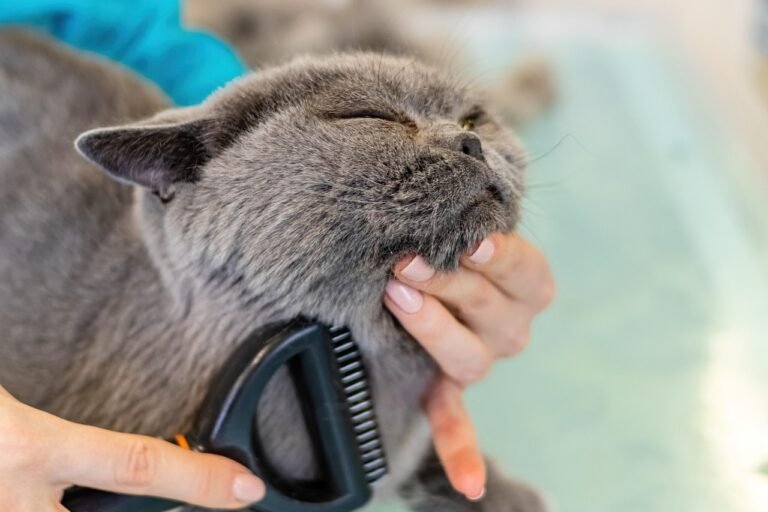
- Brush little and often. PetMD recommends regular brushing, daily for medium and long-haired cats, with a soft brush and a gentle touch, in short calm sessions with praise or treats.
- Leave mats to the professionals. PetMD warns that mats will not go away on their own, and that older cats have delicate skin that can be injured by rough brushing or close trimming. Ask your vet or an experienced groomer.
- Check the nails. Dr Givin advises checking older cats’ nails closely because overgrowth is easy to miss, and PetMD suggests monthly trims. If your cat resists, see our guide to a cat that will not let you trim her claws.
- Treat the pain. If arthritis is suspected, PetMD suggests asking your vet about joint supplements or pain relief.
- Make brushing pleasant. If your cat dislikes being handled, read how to help a cat that hates being brushed.
Grooming changes often come with other signs of ageing. If your older cat has also started crying at night, see why old cats yowl at night.
FAQ
Why has my cat stopped grooming itself?
Common reasons include arthritis, extra weight, dental pain and illnesses such as kidney disease, thyroid problems or diabetes. Tell your vet as soon as you notice the change.
Why does my cat’s fur look greasy?
A cat that grooms less leaves oil on the coat, and ageing skin can produce more oil. Pain, weight and illness are common reasons a cat grooms less.
Should I cut out my cat’s mats?
No. Older cats have delicate skin that is easy to cut. Ask your vet or an experienced groomer.
Is it normal for old cats to stop grooming?
It is common, but not something to ignore. It usually has a cause, such as arthritis or dental pain, that can be treated or eased.
How can I help my cat groom?
Brush gently and often in short sessions, keep nails trimmed, and work with your vet on any pain or illness.
Sources
This article is for general information and is not a substitute for advice from your veterinarian.