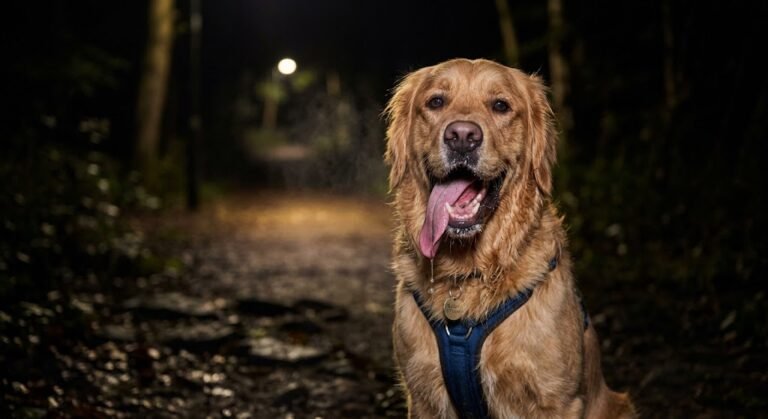
It is time for the last toilet break of the night. You open the back door and your dog freezes, backs away, or plants its feet on the doormat. Maybe it started after a night of fireworks, maybe after a single loud bang. Now the dark garden seems to be the scariest place in the world. This is common, and with patience it usually improves.
Why your dog is suddenly scared to go outside at night
The garden is where the scary thing happened
If your dog heard bangs while outside, or the noise came from that direction, the garden itself can start to predict danger. Night is when fireworks usually happen, so darkness can become part of the warning too.
Fear spreads
A University of Bristol study of noise fear in dogs, led by Emily Blackwell, found that fear responses to fireworks, gunshots and thunder commonly occur together, suggesting fear can spread from one loud noise to others. Fear rarely stays neatly in one box.
Something else changed
A new light, a neighbour’s dog, building work or an unfamiliar smell can also make the garden feel different. If your dog is reluctant at the door at other times too, see our guide to a dog that will not come inside for the other side of the door problem.
How common noise fear is
In other words, many dogs are more scared than their owners realise. The Cornell Riney Canine Health Center lists trembling, vocalising, panting, pacing, drooling, hiding, digging at doors and escape attempts among the signs.
What to do tonight
- Use a lead, even in a fenced garden. Cornell advises keeping dogs on a lead outside during noise, as a precaution. A scared dog can bolt, and fear is a common reason pets run away and get lost.
- Go out with your dog. Stand calmly in the garden with them. A familiar person nearby helps many dogs. Cornell advises staying home to comfort a noise-phobic dog.
- Turn on the lights. A well lit, familiar garden is less mysterious.
- Keep it short. Let your dog do its business and come straight back in. Reward with a treat and praise the moment it goes.
- Time it before the noise. On nights when fireworks are likely, take the last toilet break earlier, before dark or before the bangs start.
- Make inside a safe place. Cornell suggests a familiar space with a cosy bed, in a room far from the noise with few or no windows, and white noise or calm music to mask sounds.
Rebuilding confidence over the next weeks
- Practise in daylight first. Short, rewarded trips in the garden when it is quiet and light.
- Move slowly into dusk. As your dog relaxes, shift practice sessions closer to evening, then to dark, always with you and on a lead.
- Bring good things outside. Play a favourite game or scatter a few treats on the grass, so the garden becomes a good place again.
- Let your dog set the pace. If your dog stops or looks tense, wait, praise any step forward, and keep the session short.
- Keep ID up to date. Cornell advises current ID and microchip details, and a secure home and garden, in case a scared dog escapes.
Fear can also make stairs and slippery floors harder for some dogs; see our guide on a dog that is scared of the stairs.
When to see the vet
FAQ
Why is my dog suddenly scared to go outside at night?
Often because a frightening noise, such as fireworks, happened outside or at night, and your dog now links the garden or the dark with it. A vet check is worth it if the change is sudden and you cannot find a cause.
Should I force my dog to go outside?
No. Forcing or punishing a scared dog increases its distress. Go out together, on a lead, and reward every step.
Is it okay to comfort my scared dog?
Yes. Cornell’s canine health center advises staying home to comfort a noise-phobic dog.
How common is fear of fireworks in dogs?
A University of Bristol study found that almost half of owners interviewed reported at least one fear sign in their dog during loud noises.
Can my vet help with fireworks fear?
Yes. Talk to your vet well before fireworks season about medication and a behaviour plan, and test any medication on a quiet day first.
Sources
This article is for general information and is not a substitute for advice from your veterinarian.