A good shake after a swim is normal. But when your dog keeps shaking their head, pawing at one ear or rubbing their face along the carpet, something is usually bothering that ear. Most often it is an infection of the outer ear canal, and it needs a vet to find the cause. Here is what causes it, what to look for, and what not to put in your dog’s ears.
Why is my dog shaking their head and scratching their ear?
VCA Animal Hospitals describes outer ear infection (otitis externa) as one of the most common types of infection seen in dogs. The Merck Veterinary Manual lists its direct causes as parasites, objects stuck in the ear canal, allergies, bacterial or yeast infection, and middle ear infections.
Allergies
Often the hidden driver. Merck notes that environmental allergens (dust mites, pollen, mould) and food allergies often cause red, itchy ears.
Bacteria and yeast
These are the usual infections in the canal. Merck notes that a dark discharge often indicates yeast or parasites, though it can also appear with bacterial or mixed infections.
Ear mites
VCA says ear mite infections are more common in puppies and kittens. The AKC notes that vet-approved monthly parasite control can rule out ear mites as a cause of itching.
Something stuck in the ear
Foreign objects in the canal are a recognised cause. Your vet can find and remove them, sometimes under sedation.
Ear shape and moisture
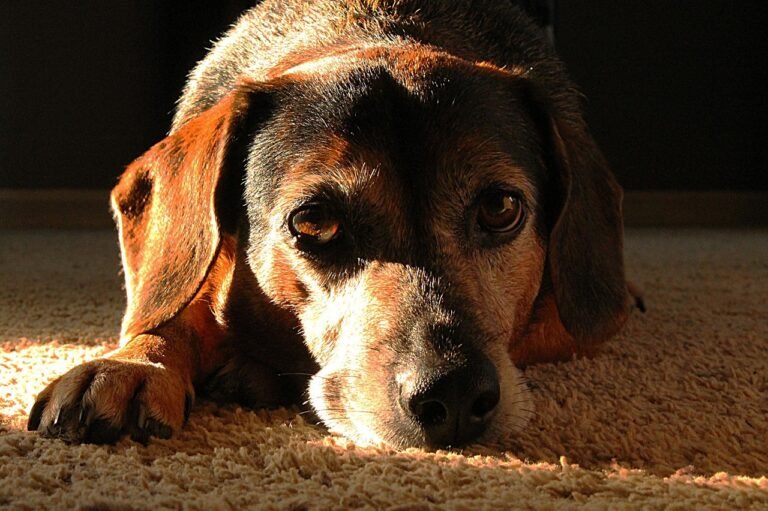
VCA says dogs with large, floppy or hairy ears are more prone to infections. The AKC explains that the L-shape of a dog’s ear canal tends to hold fluid, and names moisture and humidity as risk factors. Basset Hounds, Beagles and Cocker Spaniels are among the floppy-eared breeds it mentions.
Signs to check
Merck lists the signs of otitis externa as head shaking, foul odour, skin redness, swelling, scratching, ear discharge and scaly skin. The ear can be painful or itchy. Lift the ear flap gently and compare both sides.
| What you see | What it can suggest |
|---|---|
| Dark discharge | Often yeast or parasites, but bacteria are possible too (Merck) |
| Smell, redness, swelling | Inflamed, likely infected canal |
| A soft, puffy ear flap | Possible aural hematoma (see below) |
| Loss of balance or hearing | Possible middle or inner ear involvement, which the AKC says can affect balance in severe or chronic cases |
Why shaking can cause a swollen ear flap
Constant shaking is not harmless. Merck describes an aural hematoma as a fluid-filled swelling on the inner surface of the ear flap caused by bleeding under the skin, and says it most commonly happens when a dog shakes its head or scratches its ears. It usually needs surgery, and treating the underlying cause, such as an ear infection, is essential. Left alone, the ear can heal thickened and wrinkled, often called a “cauliflower ear.”
What happens at the vet
- Otoscope exam. The vet looks down the canal for objects, debris, parasites and damage to the eardrum. Sedation may be needed if the ear is very painful.
- Ear cytology. A swab of discharge is checked under the microscope to see whether yeast, bacteria or mites are involved.
- Cleaning and medication. Merck says most ear drops combine antibiotics, antifungals and anti-inflammatories, and vets usually clean and dry the ear first.
- Finding the root cause. If allergies or another condition are behind it, that needs treating too, or the infection tends to come back.
The AKC says most uncomplicated infections resolve within 1 to 2 weeks. Merck notes that rechecks are often every 2 to 4 weeks, long-term cases can take months, and treatment must continue until the infection is fully cleared.
What not to do
- No cotton swabs down the canal. Both Merck and the AKC say they can push debris deeper.
- Don’t stop treatment early because the scratching eases. Finish the full course your vet prescribes.
If your dog’s scratching and licking go beyond the ears, our guide to dogs licking their paws at night covers another common allergy sign.
Prevention
- Dry the ears after water. The AKC advises drying your dog’s ears thoroughly after baths or swimming. Merck suggests avoiding water in the ears during bathing and using drying agents your vet recommends for dogs that swim often.
- Clean only with a vet-approved cleaner, and only as often as your vet suggests. The AKC lists over-cleaning as a cause of ear infections.
- Keep the hair tidy. Trimming hair around the canal opening helps airflow, especially in floppy-eared dogs. Ask your vet or groomer first.
- Keep up with parasite control to rule out ear mites.
- Treat allergies properly. Merck notes allergies usually need lifelong management, so recurring ear problems are worth a full allergy work-up.
FAQ
Why does my dog keep shaking his head?
The most common reason is an outer ear infection (otitis externa). Ear mites, allergies and objects stuck in the canal are other causes. A vet needs to look in the ear to find out which.
Can a dog ear infection go away on its own?
Don’t wait to find out. VCA warns that, left untreated, an ear infection can lead to an aural hematoma, a painful swelling of the ear flap that needs surgery. See your vet.
Are some dogs more prone to ear infections?
Yes. Dogs with large, floppy or hairy ears are more prone, and allergies play a role in many cases.
Can I clean my dog’s ears with vinegar?
Merck advises avoiding irritating home remedies like vinegar mixtures, which can worsen swelling and secretions. Use a cleaner your vet recommends.
How long does a dog ear infection take to heal?
The AKC says most uncomplicated infections resolve in 1 to 2 weeks. Chronic cases can take months.
Sources
- VCA Animal Hospitals. Ear infections in dogs (otitis externa), updated 2026. Read
- Roman N. Ear infections and otitis externa in dogs. Merck Veterinary Manual, 2026. Read
- Roman N. Disorders of the outer ear in dogs. Merck Veterinary Manual, 2026. Read
- Maharaj N. Dog ear infections: symptoms, causes, treatment, and prevention. American Kennel Club, 2026. Read
This article is for general information and is not a substitute for advice from your veterinarian.