Your cat settles on your lap, starts purring, and then the paws begin: left, right, left, right, pressing into your legs like they are working bread dough. It is sweet until the claws come out. Kneading, or “making biscuits”, is one of the most common cat habits, and it has a few clear explanations. Here is why cats do it, how to make it less painful, and the rare times it is worth a closer look.
Why do cats knead?
It starts with nursing
PetMD, in an article by veterinarian Hannah Hart, explains that kittens knead to stimulate milk production from their mother. Purina describes the same thing: kneading helps encourage milk flow.
It feels calming
PetMD notes that many cats keep kneading as adults to create feelings of calm and relaxation, possibly because it reminds them of nursing. Purina adds that a cat kneading you while purring loudly may be feeling happy, safe and comforted.
Marking you with scent
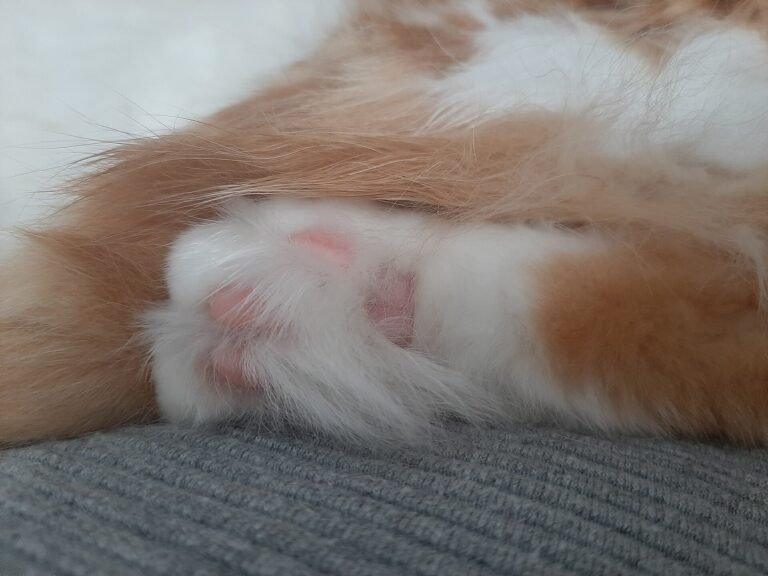
Cats have scent glands between their paw pads. Both PetMD and Purina say kneading may leave that scent behind, a quiet way of marking territory, including you.
Making a bed
Wild cats sometimes knead soft grasses or leaves to make a resting place, and PetMD notes pet cats may tamp down their bedding before sleep in the same way.
A good stretch
Some experts think kneading helps cats stretch and loosen their muscles. PetMD labels this a theory rather than a proven reason.
Being in heat
Purina notes that unspayed female cats may knead when they are in heat, often along with stretching, purring and lying on their side.
When the claws hurt
- Keep the nails short. PetMD recommends regular trims to prevent scratches. If trims are a battle, see our guide to a cat that won’t let you trim her claws.
- Add a barrier. Lay a thick blanket or cushion across your lap before your cat settles. Both PetMD and Purina suggest this.
- Give them their own kneading blanket. PetMD suggests a thick blanket as a designated spot, with a reward when your cat uses it.
- Gently redirect. Purina suggests encouraging your cat to lie down, or distracting them with a toy.
What not to do
If scratching furniture is the bigger issue, our guide to a cat scratching the sofa instead of the post covers what works.
Can kneading be a problem?
Usually not. PetMD says kneading is typically normal cat behaviour. But it lists a few situations worth noticing:
- Kneading a lot more than usual can be a sign your cat is uncomfortable or anxious, and in some cases a sign of a compulsive behaviour problem.
- Pain: a cat with arthritis or an injury may knead to stretch its limbs.
- Kneading plus suckling: some cats suckle on a blanket while kneading, mimicking nursing. Read more in our guide to cats sucking on blankets.
Some cats knead and then nip during a cuddle. If that sounds familiar, see why cats bite when petted.
FAQ
Why does my cat knead me?
Most often because it feels calming and reminds them of nursing. Kneading may also leave scent from the glands in their paw pads, marking you as familiar.
Is kneading a sign my cat is happy?
Often, yes. Purina says a cat kneading you while purring loudly may be feeling happy, safe and comforted.
Why do cats knead blankets?
Soft blankets are like the bedding wild cats knead to make a resting spot, and kneading itself is soothing for many cats.
How do I stop my cat’s kneading from hurting?
Keep the nails trimmed, put a thick blanket over your lap, and gently redirect with a toy. Never punish kneading or declaw to stop it.
Is too much kneading a bad sign?
Kneading is normally fine, but PetMD notes excessive kneading can signal discomfort, anxiety or a compulsive behaviour. Ask your vet if it suddenly increases.
Sources
This article is for general information and is not a substitute for advice from your veterinarian.