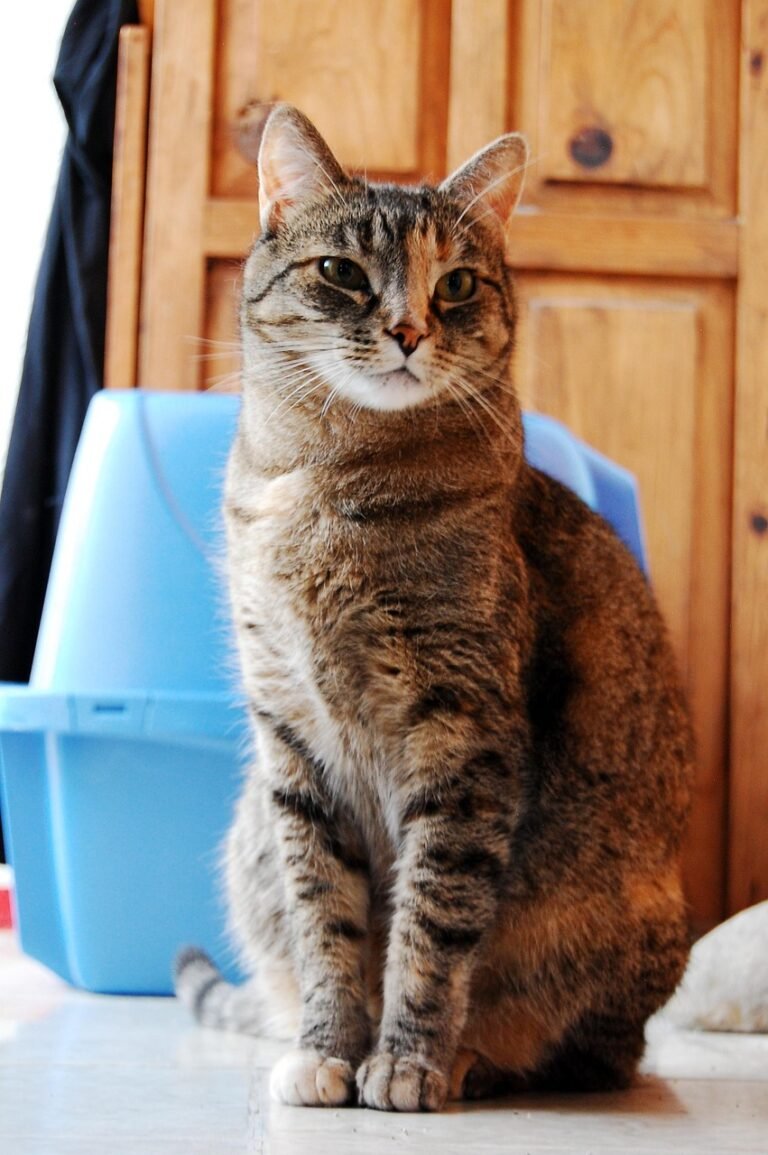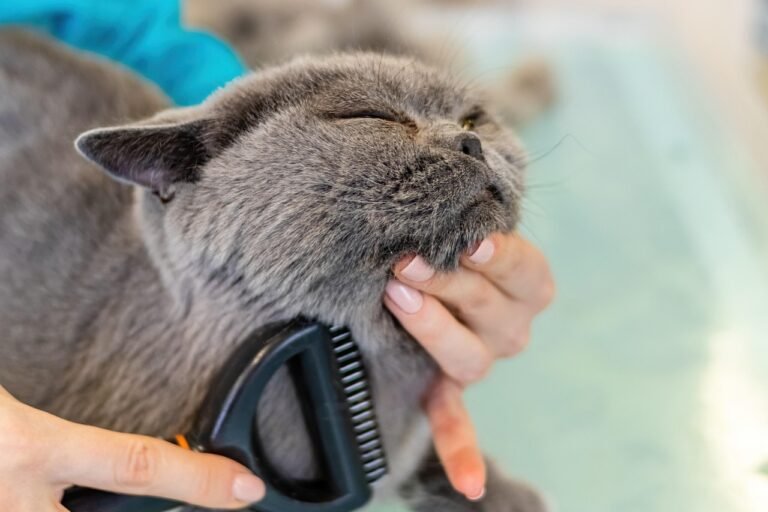
They have shared a sofa for four years. They groom each other. Then one of them goes to the vet for a morning, comes back in the carrier, steps out into the hallway, and the other one hisses, puffs up, and swipes at her like she has never seen her before. It is upsetting to watch, and the instinct is to tell the resident cat off for being unkind.
That instinct is wrong, because from the resident cat’s side this is not unkindness. It is a stranger walking into her house. Understanding why that happens is most of what it takes to fix it.
The short version
- Cats recognise each other substantially by scent. A cat who spends a few hours at a clinic comes home smelling of disinfectant, other animals and stress, and can register as an intruder.
- Cornell’s Feline Health Center notes that cats may attack resident cats they previously accepted when those cats have been away, such as for a hospital stay.
- Most cases settle within hours to a couple of days once the returning cat smells like home again.
- The fastest fix is restoring the shared scent: separate briefly, swap bedding, and reintroduce gradually rather than letting them fight it out.
- Plug-in pheromone diffusers are the most recommended product for this online, but the research behind them is mixed and in one case rests on a single pilot study.
On this page
Why she doesn’t recognise her
People recognise each other mainly by sight. Cats lean far more heavily on smell. Cats that live together build up a shared household scent, partly by rubbing their heads and bodies against each other, a behaviour called allorubbing. A 2018 review of pheromone therapy in the Journal of Feline Medicine and Surgery describes cats depositing a facial pheromone during exactly these social interactions, and notes that cats can distinguish how familiar another individual is from scent cues.
Now think about what a clinic visit does to that. Your cat spent time in a room that smells of disinfectant, other cats, dogs and frightened animals. She may have been handled, clipped, bathed or medicated. She comes home in a carrier soaked in her own stress. Her body carries none of the shared household smell and a great deal of unfamiliar smell.
The returning cat may also be behaving oddly herself: moving stiffly after an injection or procedure, still groggy from sedation, or on edge from the stress of the trip. Unfamiliar body language on top of unfamiliar smell makes the mismatch stronger.
How long it normally lasts
Cornell’s Feline Health Center puts it plainly: cats may attack resident cats that were previously accepted but were away from the home, such as for a hospital stay.
| What you see | What it usually means |
|---|---|
| Hissing and avoidance for a few hours, then normal | The ordinary version. Scent restores quickly once she grooms and settles. |
| Hissing and growling for a day or two, easing each time | Still within the normal range. Help it along with the steps below. |
| Chasing, swatting, real fights, or getting worse | The relationship has taken a knock. Move to a proper reintroduction rather than waiting. |
| Still hostile after a week | Treat it as a new introduction. It can take weeks. |
Direction matters more than duration. Hostility that eases a little each time the cats meet is resolving. Hostility that stays the same or escalates needs you to step in.
What to do when you get home
- Do not open the carrier in the middle of the living room. Take the returning cat into a quiet room of her own with food, water and a litter tray, and let her out there.
- Give her a few hours to groom and settle. Grooming replaces some of the clinic smell with her own, and time lets any grogginess wear off.
- Swap scent before they meet. Stroke the resident cat’s cheeks with a clean cloth and leave it with the returning cat, and do the reverse. Swap their bedding too.
- Let them meet on their own terms. Open the door and let the resident cat approach if she wants to. Do not carry one cat to the other.
- Feed them at a distance. A meal each, far enough apart that neither feels crowded, pairs the other cat’s presence with something good.
- Do not punish the hissing. A hiss is a warning, not an attack. Telling her off makes her more anxious about the other cat, which is the opposite of what you want.
If it doesn’t settle
If the hostility is escalating or has not eased within a few days, go back to the start and reintroduce them properly. Cornell’s recommended sequence is:
- Separate completely. Each cat in its own space with its own food, water and litter tray.
- Swap spaces daily. Let each cat spend around half an hour in the other’s area for several days, so each learns the other’s scent without meeting.
- Let them see and smell each other safely. One cat in a carrier, or both on harnesses, so they can observe without contact.
- Feed them closer together over time. Start far apart and bring the bowls gradually nearer across sessions.
- Finally, let them share a room at mealtimes and build up from there.
Cornell notes this can take weeks to months. That sounds daunting, but most cats who had a good relationship before the vet visit move through it much faster than strangers would.
A sustained period of tension like this is also genuinely stressful for both cats, and stress in cats can show up as changes in eating, grooming and litter habits. If you see those, it is worth knowing that a stressed healthy cat can look very like an unwell one, which we covered in why a cat suddenly starts sleeping in the bath.
What about pheromone diffusers?
Almost every article on this topic recommends a plug-in pheromone diffuser, often with a shop link. It is worth knowing what the evidence actually says before you spend the money.
The same 2018 review in the Journal of Feline Medicine and Surgery reports that results for the feline facial pheromone have been mixed, with some authors concluding there is insufficient evidence for its effectiveness in reducing stress. For the appeasing pheromone marketed specifically for tension between cats, the review notes that only one pilot study had been published, and that much remains to be learned.
Preventing it next time
- Put home bedding in the carrier on the way there and back, so she travels with the household smell.
- Take both cats’ scent with you. A cloth rubbed on the resident cat’s cheeks, placed in the carrier for the return journey, helps.
- Plan the quiet room in advance so you are not improvising with a hissing cat and a carrier in the hallway.
- Keep resources separate generally. Households with more than one cat tend to have fewer conflicts when every cat has access to its own food, water and litter without passing another. We covered tray numbers in the article on covered versus open litter boxes.
Common questions
Why does my cat hiss at my other cat after the vet?
Because cats recognise each other largely by scent, and a cat returning from a clinic smells unfamiliar. Cornell notes that cats may attack previously accepted resident cats that have been away, such as for a hospital stay.
How long does it take for cats to accept each other again?
Usually hours to a couple of days. If hostility is still present after a week, or is getting worse, treat it as a fresh introduction, which can take weeks.
Should I let them fight it out?
No. Fighting can damage the relationship and injure the cats. Separate them, restore shared scent, and reintroduce gradually instead.
Is it the cat who went to the vet or the one at home that is the problem?
Neither is misbehaving. The resident cat is reacting to an unfamiliar smell, and the returning cat may be stressed, sore or groggy. Both need space.
Do pheromone diffusers work for this?
The evidence is mixed. A 2018 review found inconsistent results for facial pheromone products and only one pilot study for the appeasing pheromone aimed at tension between cats. They may help some cats but should not replace separation and scent swapping.
The bottom line
Your cat has not fallen out with her friend. She has met an animal that looks like her friend and smells like a stranger. Give the returning cat a quiet room and a few hours, swap their scents before they meet, never punish the hiss, and if it drags on, reintroduce them properly. Most pairs are back on the sofa together within a day or two.
Sources
- Cornell Feline Health Center. Feline behavior problems: aggression, including aggression towards cats returning after a hospital stay, and the recommended reintroduction process.
- Vitale KR. Journal of Feline Medicine and Surgery, 2018. Tools for managing feline problem behaviors: pheromone therapy.